
New Haven Real Estate Attorney · October 6, 2026
Shared Utility Meter? A New Connecticut Lease Cannot Make You Pay That Bill
Under Public Act 26-113, a Connecticut lease signed or renewed on or after October 1, 2026 cannot require a tenant to pay for utilities billed to the tenant unless a separate meter measures only that unit.
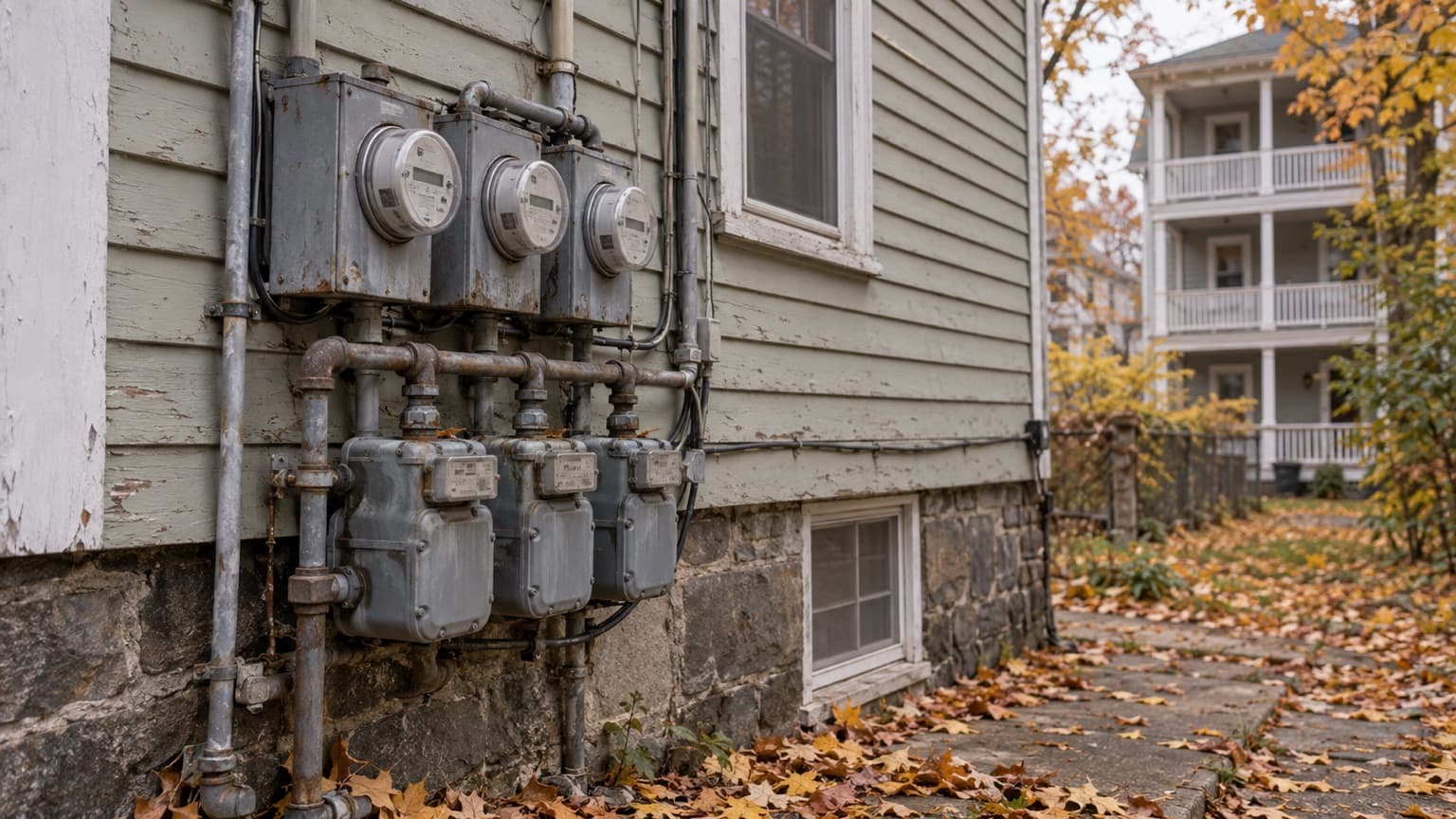
A Connecticut lease signed or renewed on or after October 1, 2026 cannot require a tenant to pay for utilities billed to the tenant unless a separate meter measures the utilities delivered only to that tenant's apartment. A lease term that tries to do so is unenforceable.
That is the change made by Public Act 26-113, one of the laws in our guide to the new Connecticut laws that took effect October 1, 2026. It matters most in older two-family, three-family and apartment buildings where several units run off one gas, electric or water meter. If you rent or own in a building like that in New Haven and a lease is up for renewal this fall, it is worth finding out how the building is metered.
What The New Rule Says
Connecticut already had a list of terms a residential lease cannot contain. A lease cannot make a tenant agree to be removed without a court order, for example, or to pay a late charge before the grace period ends. Public Act 26-113 adds one more item to that list in C.G.S. § 47a-4. A rental agreement may not provide that the tenant "agrees to pay for utilities billed to the tenant if no separate meter is used to measure utilities delivered exclusively to such tenant's dwelling unit."
Two words in that sentence do most of the work.
The first is "separate." If one meter serves the whole building, or your apartment and the one upstairs, the utilities to your unit are not measured separately.
The second is "exclusively." A meter that measures your apartment plus a common hallway, a shared basement or a shared laundry room does not measure only what is delivered to your unit.
The rule covers more than signed leases. Connecticut law defines a "rental agreement" to include written and oral agreements about the use and occupancy of an apartment, under C.G.S. § 47a-1. A handshake deal to split the gas bill four ways can be a rental agreement term too.
Which Leases It Covers
The new rule applies to rental agreements entered into or renewed on or after October 1, 2026. A one-year lease signed in June is generally governed by the earlier law until it is renewed. When it renews, the new rule applies.
Say your lease ran from November 1, 2025 through October 31, 2026, and it made you pay a third of the building's gas bill. If you and your landlord sign a renewal on or after October 1 for another year starting November 1, 2026, your landlord cannot enforce that clause in the renewed lease, even if it is printed on the same form you signed last year.
That does not necessarily make a utility charge in an older lease valid. Even before the new act, a separate statute, discussed below, generally made the landlord responsible for the building's utilities. In 2024 the Connecticut Supreme Court held that it barred a landlord from dividing a master-metered building's bill among tenants by its own formula. If your current lease already has a charge like that, have a lawyer look at it before you change how you pay.
Month-to-month tenancies are less clear. The act does not say whether each new month counts as a renewal. If you rent month to month and your landlord is billing you for a shared meter, that is a good question to bring to a lawyer rather than assume either way.
What Did Not Change
Two older rules still sit alongside the new one.
First, since 2005 a Connecticut lease has been barred from requiring a tenant to pay a heat or utilities surcharge when heat or utilities are already included in the rental agreement. That rule is still in § 47a-4, and a term that violates it is still unenforceable.
Second, under C.G.S. § 16-262e(c), the owner or manager of a residential building is generally liable for the cost of electricity, gas, water and heating fuel furnished to the building, unless the service is furnished to a unit on an individually metered or billed basis for the exclusive use of the people living there.
In the 2024 case, a divided Connecticut Supreme Court applied that statute to a landlord that wanted to divide a master-metered building's utility bill among its tenants each month, using a formula based on factors such as square footage and the number of occupants. In Northland Investment Corp. v. Public Utilities Regulatory Authority, 349 Conn. 35 (2024), the court held that § 16-262e(c) does not allow that kind of billing, because it makes tenants liable for utilities they did not exclusively use.
The court added that a landlord with a master meter may estimate the cost of utilities for the year and build that figure into the monthly rent. The court treated that as ordinary rent setting, the same way rent reflects taxes, insurance and repairs. The legislature's research office pointed to this decision when it summarized the 2026 act.
If The Rent Goes Up Instead
At renewal, your landlord may propose a higher rent that includes estimated utility costs. That may be lawful, but it still has to follow the rules for rent increases.
Under C.G.S. § 47a-4e, a rent increase is not effective unless the landlord gives the tenant written notice at least 45 days before it takes effect, except that a lease with a term of a month or less requires notice equal to one full term. A tenant's silence does not count as agreement, and the statute does not give a landlord the right to raise the rent during the term of a lease.
A tenant who thinks an increase goes too far has another option. Connecticut requires each municipality with 15,000 or more residents to create or join a fair rent commission by January 1, 2028, and some already have one. These commissions hear complaints about rental charges, a term that includes any fee or charge on top of rent, under C.G.S. § 7-148b. The question is whether a charge or increase is so excessive as to be harsh and unconscionable. Under C.G.S. § 7-148c, the commission considers factors that include the availability of utilities and the amount and frequency of increases. New Haven has had a Fair Rent Commission since 1970.
What To Do If You Rent
Start with the renewal paperwork. Read it for any line that makes you pay a share of a utility bill, a flat utility fee, or a charge "allocated" among units. Then find out which meters serve your apartment. Your landlord should be able to tell you, and the utility bill may show whether the account and meter are for your unit alone.
If a new or renewed lease includes a utility term the law now prohibits, do not stop paying on your own. The act makes the term unenforceable. It does not create a step-by-step remedy, and holding back rent can lead to an eviction case if it is handled wrong. Keep paying your rent. Keep copies of the lease, the utility charges and any notices. Then get advice on how to raise it with your landlord.
If a utility account in your own name also serves a hallway, a basement or another apartment, you may be paying for service you do not use. That problem may involve § 16-262e, which has its own rules, as well as the new lease rule, and it is worth reviewing with a lawyer before you change anything.
What To Do If You Own The Building
If you reuse a lease form, check it before the next renewal. If that form passes a share of a shared-meter bill to tenants, it needs to change.
A few questions to work through:
- Which utilities to each unit are measured by a meter that serves only that unit?
- Which units share a meter with each other or with common areas?
- For the shared ones, will you pay the bill and build an estimate into the rent, or change the metering?
- If the rent goes up, will you give written notice at least 45 days before the increase takes effect, or one full term beforehand for a lease of a month or less?
Be careful with a landlord-installed submeter. The act does not define "separate meter," and it does not say whether a meter the owner installs to measure one unit's use counts. Get advice before relying on one to bill a tenant. Also keep the older surcharge rule from § 47a-4 in mind if your lease says heat or utilities are included.
Another October 1 law changed which water-test results trigger an owner's duty to notify tenants, which we covered in our article on private wells and PFAS.
If you are a tenant facing a renewal with a new utility charge, or a landlord updating a lease for a building with shared meters, our real estate attorneys can review the lease with you. Contact our office to talk through your situation.
Frequently Asked Questions
- Can my Connecticut landlord charge me for utilities if my apartment does not have its own meter?
- Not under a lease signed or renewed on or after October 1, 2026. Public Act 26-113 makes a lease term unenforceable if it requires the tenant to pay for utilities billed to the tenant when no separate meter measures the utilities delivered only to that tenant's unit. The landlord may still generally build estimated utility costs into the rent, subject to the notice rules for rent increases. A lease signed before October 1 and not yet renewed may be governed by the earlier law, but a separate statute can also limit these charges: in 2024 the Connecticut Supreme Court held that a landlord may not divide a master-metered building's utility bill among tenants by its own formula.
- Does the new utility law apply to my current lease?
It depends on when the lease was signed or last renewed. The new rule applies to rental agreements entered into or renewed on or after October 1, 2026. A lease signed in the spring for a one-year term generally is not affected until it is renewed, though an older law may already bar a charge that divides a shared meter's bill among tenants. If you rent month to month, whether the new rule already applies is a question worth asking a lawyer about, because the act does not say how it treats those tenancies.
- Can my landlord raise the rent to cover utilities instead?
- Generally yes, but only by following the rules for rent increases. In 2024 the Connecticut Supreme Court said a landlord with a master meter may estimate the year's utility costs and build that figure into the monthly rent. Under C.G.S. § 47a-4e, an increase is not effective without written notice at least 45 days before it takes effect (one full term for a lease of a month or less), and the statute does not give a landlord the right to raise the rent during the term of a lease. If a fair rent commission serves your municipality, you may complain to it about an increase you believe is harsh and unconscionable.
- My lease says heat is included. Can my landlord add a separate utility charge anyway?
- Generally not for heat or utilities the lease already includes, and that rule is not new. Since 2005, C.G.S. § 47a-4 has barred a Connecticut lease term requiring a tenant to pay a heat or utilities surcharge when heat or utilities are included in the rental agreement, and such a term is unenforceable. Whether a particular charge counts as a surcharge can depend on what the lease says is included, so it is worth having the lease reviewed. The 2026 act adds a separate rule for apartments without their own meter.
- Should I stop paying if my lease has a utility term the law now prohibits?
Not on your own. The act makes the term unenforceable, but it does not tell tenants to stop paying, and holding back rent or other payments can lead to an eviction case if it is handled wrong. Keep paying your rent, keep copies of the lease and every utility charge, and get advice about the right way to raise the issue with your landlord.
This article provides general information, not legal advice for a particular case. Reading it does not create an attorney-client relationship.