
New Haven Auto Accident Attorney · November 10, 2026
Hit By A Drunk Or Reckless Driver In Connecticut: When A Jury Can Double Or Triple The Damages
Connecticut law lets a jury double or triple the damages when a driver deliberately or recklessly broke certain traffic laws, such as drunk driving, speeding or wrong-way driving. Here is what has to be proved, and who pays.
Connecticut law lets a jury double or triple the damages in a crash case. Lawyers call this double or treble damages. The relevant statute is C.G.S. § 14-295. It applies when the injured person specifically pleads and proves two things: that the other driver deliberately or with reckless disregard broke one of the traffic laws the statute lists, and that the violation was a substantial factor in causing the harm. It covers personal injury, wrongful death and property damage.
The rule may apply when a drunk driver causes a crash, a driver goes the wrong way on I-95, or a driver races through a neighborhood. But the extra damages are not automatic. Every condition in the statute has to be met, and even then the jury decides whether to multiply the award.
Which Traffic Violations Qualify For Double Or Treble Damages
Section 14-295 applies only to the violations it lists. They are:
- traveling unreasonably fast (§ 14-218a) and speeding (§ 14-219)
- reckless driving (§ 14-222)
- operating under the influence of alcohol or drugs, also called OUI or DUI (§ 14-227a), including with a child passenger (§ 14-227m) or in a school bus, student transportation vehicle or other vehicle specially designated to carry children (§ 14-227n)
- failing to keep to the right side of the road (§ 14-230)
- illegally passing in a no-passing zone (§ 14-234)
- unlawfully driving on the wrong side of a divided highway or across its median (§ 14-237)
- driving the wrong way on a one-way street or breaking the rotary and roundabout rules (§ 14-239)
- following another car too closely with the intent to harass or intimidate its driver (§ 14-240a)
- prohibited use of a hand-held phone or mobile electronic device while driving (§ 14-296aa)
A violation that is not on the list, such as running a red light, does not qualify under § 14-295 on its own. It can still help prove the ordinary negligence claim, which is the claim for your medical bills, lost wages and pain and suffering. The same crash can also involve more than one violation. So a lawyer will look at everything the driver did, not just the first ticket written at the scene.
Wrong-Way Driving Crashes In Connecticut
Driving into oncoming traffic on a divided highway violates § 14-237, and driving the wrong way on a one-way street violates § 14-239. Both are on the § 14-295 list.
The Connecticut Department of Transportation (CTDOT) says wrong-way crashes are often fatal. In 2022 there were 13 wrong-way crashes that killed 23 people, and preliminary 2023 data showed five crashes and seven deaths. CTDOT also says that in almost every wrong-way crash, the driver was found to be impaired by alcohol. So a wrong-way crash may also involve the drunk driving statute.
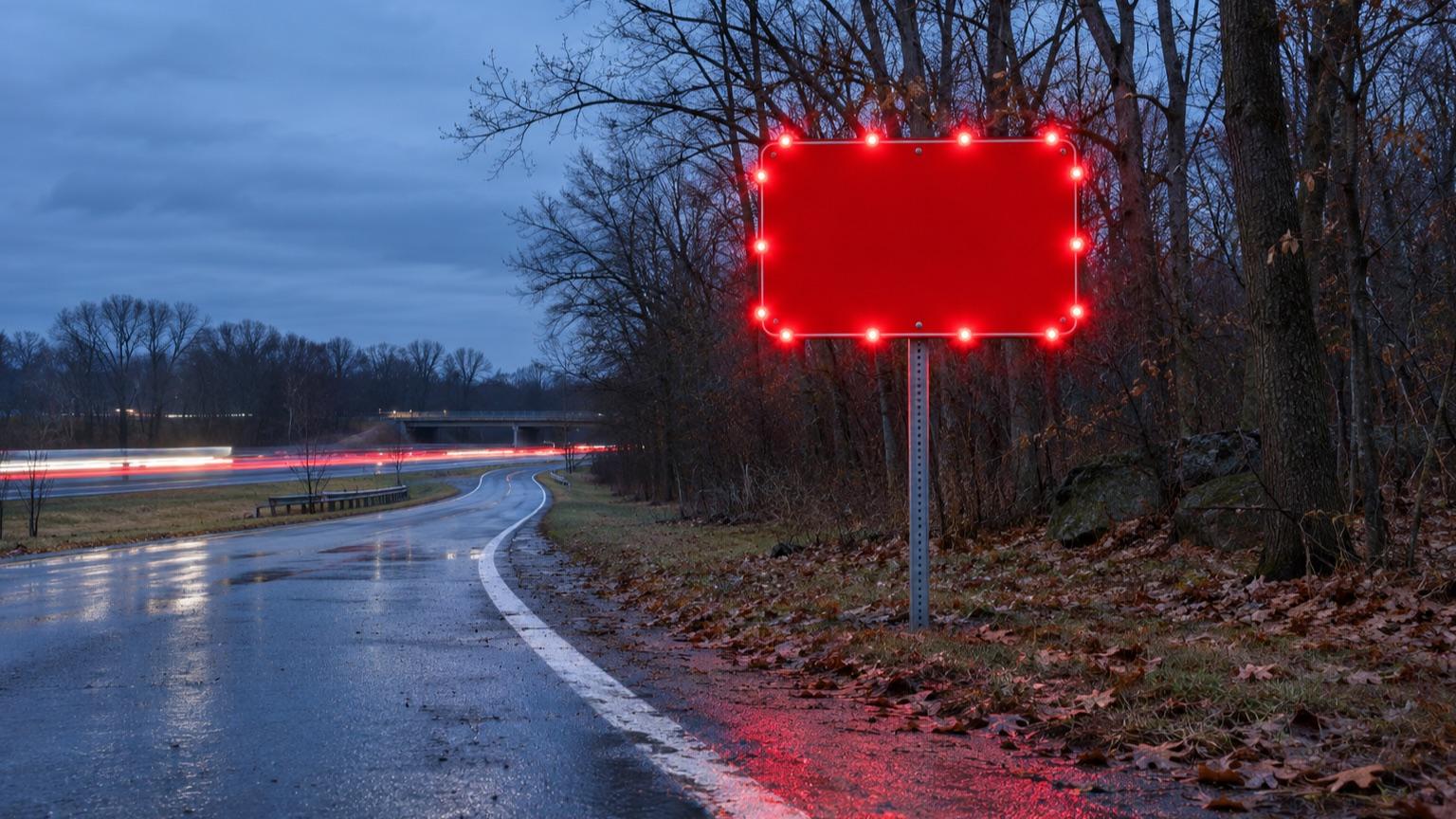
CTDOT has been installing wrong-way detection systems on highway off-ramps. In September 2026 it activated its 300th system and reported that more than 1,000 drivers had set one off and turned around since the program began in December 2023. The systems use cameras to detect a vehicle going the wrong way, flash red lights on the warning signs, and alert CTDOT's highway operations centers and the State Police in real time. After a wrong-way crash, a lawyer can ask CTDOT early whether a detection system was on the ramp the driver used, whether it flashed its warning or alerted the State Police, and whether any image or record was kept. Evidence that the driver went past flashing warning signs can matter in proving reckless disregard, explained below.
What "Reckless Disregard" Means
Under the civil jury instruction for § 14-295, "deliberately or with reckless disregard" means more than negligence, and more than gross negligence. It describes a state of mind about the consequences of what the driver was doing. This element is what separates a § 14-295 claim from an ordinary negligence case.
The jury can infer that state of mind from the driver's conduct, but it needs something more than a failure to pay reasonable attention. The instruction describes reckless conduct as highly unreasonable conduct, an extreme departure from ordinary care, in a situation where a high degree of danger is apparent.
A moment of inattention usually is not enough. Driving drunk, driving far over the limit in heavy traffic, weaving through cars or driving the wrong way after passing the warning signs may be enough. Evidence that often matters includes:
- the police report, field sobriety notes and any breath, blood or urine results
- witness statements about how the car was driven before the crash
- dashcam, doorbell or business video
- the car's event data recorder, which may store speed data from just before the crash
- phone records, if a hand-held phone was in use
A criminal conviction is not required. The civil jury decides, on the evidence in the civil case, whether the driver deliberately or recklessly broke a listed law. An OUI arrest, a test result or a guilty plea may become important evidence there, but it does not decide the civil claim by itself. If the other driver was arrested, our post on what happens after an OUI arrest explains the criminal side.
How A Double Or Treble Damages Claim Is Pleaded And Decided
Section 14-295 requires the injured person to have "specifically pleaded" the claim. That means the complaint, the document that starts the lawsuit, must allege that the driver deliberately or with reckless disregard violated a particular listed statute, and that the violation was a substantial factor in causing the harm. A complaint that alleges only ordinary negligence does not by itself ask for multiple damages.
The link between the violation and the harm also has to be proved. A violation counts only if it was a substantial factor in causing the injury, death or property damage. If another driver ran a stop sign into the speeding car's path, for example, the jury would still have to decide whether the speeding itself was a substantial factor in the harm.
If the claim is proved, the jury first decides fair, just and reasonable damages. It then may multiply them by two or by three. That choice belongs to the jury, so the evidence of how the driver behaved matters at trial, not just the evidence of your injuries. If the case is tried to a judge without a jury, the judge makes these decisions.
Double Or Treble Damages Versus Common Law Punitive Damages
Double or treble damages are separate from common law punitive damages. Connecticut's jury instructions note that both may be awarded in appropriate cases. Common law punitive damages in Connecticut, however, are limited to the costs of litigation, including attorney's fees, minus routine court costs, which are handled separately.
Double Or Treble Damages In Wrongful Death Cases
When a drunk or reckless driver kills someone, the estate's wrongful death claim can include a request for double or treble damages. That request has to be pleaded and proved the same way as in an injury case. That makes evidence of how the driver behaved important, and some of it, such as store or doorbell video, may not be kept for long. A wrongful death claim also has its own deadline: generally two years from the date of death and no more than five years from the act or omission, with narrow exceptions. A family should ask a lawyer about the deadline and the evidence right away.
Who Pays Double Or Treble Damages
Collecting a multiplied verdict depends on who can pay it, and some of the usual sources do not cover the extra amount.
Uninsured and underinsured motorist coverage generally does not pay the multiplied part. In Caulfield v. Amica Mutual Ins. Co., 31 Conn. App. 781 (1993), the Connecticut Appellate Court held that multiple damages under § 14-295 are not recoverable under the uninsured motorist provision of an auto policy. Your own uninsured or underinsured motorist coverage may still pay your ordinary damages up to its limits, including after a hit-and-run, as we explain in our post on pedestrians hit after dark.
Rental and leasing companies generally are not responsible for the extra damages. The statute says the owner of a rental or leased vehicle is not responsible for double or treble damages unless the damages came from the owner's own operation of the vehicle.
The driver's own insurance may not cover the extra amount. The Connecticut Supreme Court held in Tedesco v. Maryland Casualty Co., 127 Conn. 533 (1941), that the at-fault driver's liability policy in that case did not cover the doubled part of the verdict, which was awarded under an earlier version of § 14-295. A policy's exclusion for punitive damages does not necessarily exclude double or treble damages, so the answer can turn on the policy's exact wording. If no insurance covers the extra amount, it may have to come from the driver personally, so what the driver owns matters. Part of a lawyer's job is identifying every policy and source that may apply.
What To Do After A Crash With A Drunk Or Reckless Driver
- Get medical care, and keep every record.
- Ask for the police report number and the name of the investigating department.
- Write down what you saw the other driver do before the crash, and who else saw it.
- Report the crash to your own insurer promptly, especially if the other driver may be uninsured.
- Do not give the other driver's insurer a recorded statement before you talk with a lawyer.
A lawsuit against the driver for negligence or reckless misconduct generally must be filed within two years from when the injury was first sustained or discovered, or reasonably should have been discovered, and generally no more than three years after the act or omission complained of. A wrongful death claim has its own deadline, explained in the wrongful death section. Uninsured motorist claims have their own rules, and policy notice requirements can come much sooner.
If you were hurt by a driver who was drunk, speeding, going the wrong way or using a phone, or lost a family member in a crash like that, contact our office for a free consultation or call us at 203-865-3123. We can review the evidence and explain whether a § 14-295 claim may fit.
Frequently Asked Questions
- Can I get triple damages if a drunk driver hit me in Connecticut?
- You may be able to ask for them. Under C.G.S. § 14-295, a jury may double or triple your damages if your complaint specifically pleads, and you prove, two things. First, the other driver deliberately or with reckless disregard drove under the influence or broke another listed traffic law. Second, that violation was a substantial factor in causing your injuries. Even then, the jury decides whether to multiply the award; drunk driving does not make it automatic. Furthermore, if the jury does multiply it, collecting the extra amount is a separate question, because the driver's insurance and your own uninsured motorist coverage may not pay it.
- Does the other driver have to be convicted of DUI or OUI before I can ask for double or treble damages?
No. The statute does not require a criminal conviction. In the civil case, the jury decides on the evidence presented there whether the driver deliberately or recklessly violated a listed statute, such as the drunk driving statute. An arrest, test results or a guilty plea in the criminal case may become important evidence, but the civil claim has its own proof and its own deadlines.
- Will my uninsured motorist coverage pay double or triple damages?
- Generally no. The Connecticut Appellate Court held in Caulfield v. Amica Mutual Ins. Co., 31 Conn. App. 781 (1993), that multiple damages under § 14-295 are not recoverable under the uninsured motorist provision of an auto policy. Your uninsured or underinsured motorist coverage may still pay your ordinary damages up to its limits. Any multiplied amount might have to come from another source, such as the driver, and a lawyer can help you work out which sources can actually pay.
- Does running a red light count for double or treble damages?
Not under § 14-295 by itself. The statute lists specific violations: traveling unreasonably fast, speeding, reckless driving, drunk or drugged driving (including with a child passenger or in a school bus or other vehicle specially designated to carry children), failing to keep right, illegal passing in a no-passing zone, driving the wrong way on a divided highway or one-way street, breaking the rotary and roundabout rules, tailgating to harass or intimidate another driver, and prohibited use of a hand-held phone or other mobile electronic device while driving. Each one counts only if the driver committed it deliberately or with reckless disregard and it was a substantial factor in the harm. A red-light violation is not on that list, though it can still help prove that the driver was negligent. The same driver may also have violated a listed statute, such as reckless driving.
- How long do I have to bring a claim against a drunk or reckless driver in Connecticut?
- A lawsuit against the driver for negligence or reckless misconduct generally must be filed within two years from when the injury was first sustained or discovered, or reasonably should have been discovered, and generally no more than three years after the act or omission complained of. A wrongful death claim has its own deadline: generally two years from the date of death, and no more than five years from the act or omission, with narrow exceptions. For an uninsured motorist claim, a Connecticut policy generally cannot set a deadline for suit or arbitration shorter than three years from the accident. If the other vehicle is uninsured because its insurer became insolvent or denied coverage, the policy's deadline can be as short as one year after you receive written notice of the insolvency or denial. Policy notice requirements may come much sooner. Talk with a lawyer early, because a double or treble damages claim has to be specifically pleaded in the complaint.
This article provides general information, not legal advice for a particular case. Reading it does not create an attorney-client relationship.