
New Haven Auto Accident Attorney · November 27, 2026
Two Cars Back Out At The Same Time: Who Is At Fault In A Connecticut Parking Lot Crash?
When two cars collide in a Connecticut parking lot, fault can be shared. This post explains how each driver's lookout and Connecticut's comparative negligence rule can affect your claim.
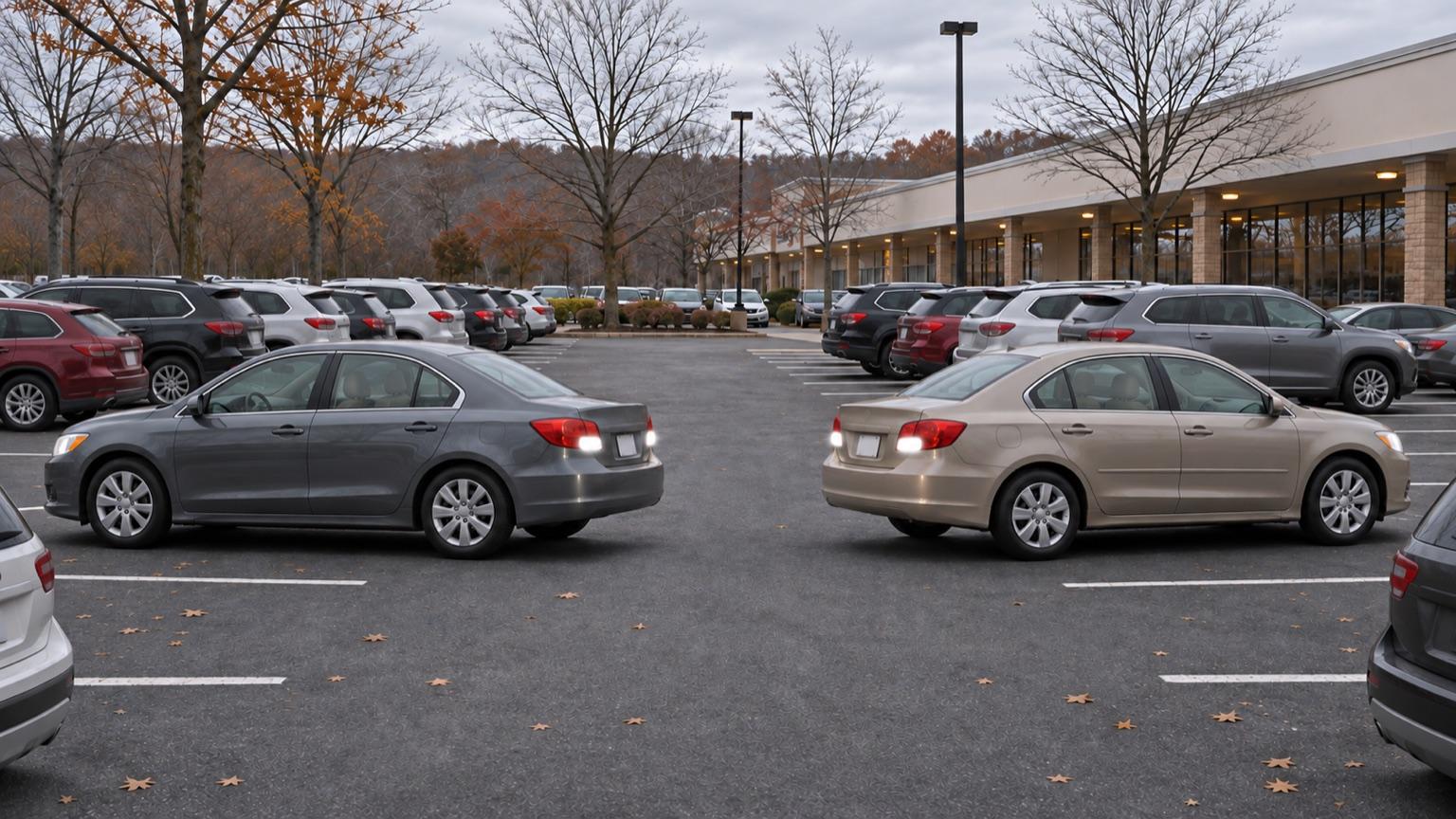
As you back out of a space in a crowded shopping lot, another car backs out across the aisle at the same time, and your two rear bumpers collide. Both of you step out certain the other driver caused it. A few days later, an insurance adjuster calls and tells you the crash was partly or wholly your fault.
In a Connecticut parking lot crash, fault can be divided between both drivers by percentage. Your share reduces what you can recover for injuries and vehicle damage, and a driver more than half at fault recovers nothing. Even if an adjuster says you share some of the blame, you may still have a claim.
Two Cars Backing Out Does Not Always Mean An Even Split
When two drivers back into each other, both may share fault if neither kept a reasonable lookout.
The Connecticut Civil Jury Instructions state the duty: "A driver is required to keep a reasonable lookout for other persons and traffic." Connecticut's backing statute, C.G.S. § 14-243(b), states a related standard: "No person shall back a vehicle unless such movement can be made with reasonable safety and without interfering with other traffic."
Shared fault, however, does not mean every two-car backing crash ends in an even split. Which driver moved into the aisle first, how fast each car was traveling, whether one driver had already come to a full stop before impact, and where the damage sits on each bumper or quarter panel can all affect how fault is divided. A driver who pulled partway into the aisle, saw the other vehicle, and stopped is in a different position from a driver who never looked back.
One Car Backing Out, One Driving Through: Both Drivers Still Have Duties
Not every parking lot crash involves two cars backing up. In another familiar scenario, one car is backing out of a parking space and collides with a car driving straight down the aisle. Some may think that the driver moving down the aisle is in the clear. Under Connecticut law, however, that driver still has duties of their own.
Connecticut's civil jury instructions say a driver may assume others will obey the law and use reasonable care. That assumption lasts only until the driver knows, or with reasonable care should know, that "the assumption has become unwarranted." For a driver moving down a lot aisle, that point can arrive as soon as another car is visibly edging out of a space.
Speed in the lot matters as well. Connecticut's speed statute, C.G.S. § 14-218a(a)(1), names parking areas directly: no one may drive "on any parking area as defined in section 14-212 … at a rate of speed greater than is reasonable, having regard to the width, traffic and use of" the lot. If the driver in the aisle was going too fast for the conditions, was not keeping a lookout, or had room to stop and did not, fault can land on both drivers.
How Shared Fault Reduces Or Bars Your Claim
In either situation, once fault is divided between the drivers, Connecticut's comparative negligence rule decides how much you can recover. It reduces your recovery by your share of the fault, bars recovery if you are more than half at fault, and applies to both injury claims and damage to your car.
Under C.G.S. § 52-572h(b), a person who was partly at fault can still recover if their negligence "was not greater than the combined negligence" of those they are claiming against, and the damages "shall be diminished in the proportion of the percentage of negligence attributable to the person recovering."
The jury instruction on comparative negligence gives an example: if you are 20 percent at fault and the other driver is 80 percent at fault, you recover 80 percent of your damages.
How Evidence At The Scene Shapes The Fault Split
The aforementioned percentages turn on proof of where each car was and how the collision happened, and some of that proof starts at the scene. Under C.G.S. § 14-224(b)(3), any driver knowingly involved in a crash that damages another car or other property must stop at once, help anyone who needs it, and give their name, address, license number, and registration number to the owner of the damaged property, a witness, or an officer. If the driver cannot give that information to any of them, the statute requires an immediate report to the police. Call the police to report the crash, and write down the other driver's details before leaving the lot.
Beyond exchanging information, photos of where both cars came to rest and where each vehicle was struck, the names of any witnesses, and any police report can help resolve conflicting stories. If the plaza has exterior cameras, ask the store early to keep its surveillance video. When a pedestrian is hit in a lot or crosswalk, or when the store's own responsibility for the lot is at issue, see parking lot crosswalk injuries and store responsibility.
Keep an eye on the filing deadline as well. Under C.G.S. § 52-584, Connecticut generally allows two years to bring a negligence lawsuit for personal injury or property damage, measured from when the injury happened or reasonably should have been discovered, with an outer limit of three years from the act or omission.
In a disputed parking lot crash, one percentage point can decide the entire claim. On $10,000 in proven damages, 50 percent fault means you recover $5,000; at 51 percent, you recover nothing. An insurance adjuster's fault split is that company's position, not a legal ruling.
If an insurer has put a percentage on your share of a Connecticut parking lot crash, talk with our office about the split or call 203-865-3123. Our New Haven auto accident attorney page covers injury claims after other kinds of crashes.
This article provides general information, not legal advice for a particular case. Reading it does not create an attorney-client relationship.