
New Haven Personal Injury Lawyer · November 19, 2026
Is A Connecticut Store Responsible If A Car Hits You In Its Parking Lot?
A 2026 Connecticut Appellate Court decision about a missing yellow line explains why the store that controls the lot may share responsibility with the driver.
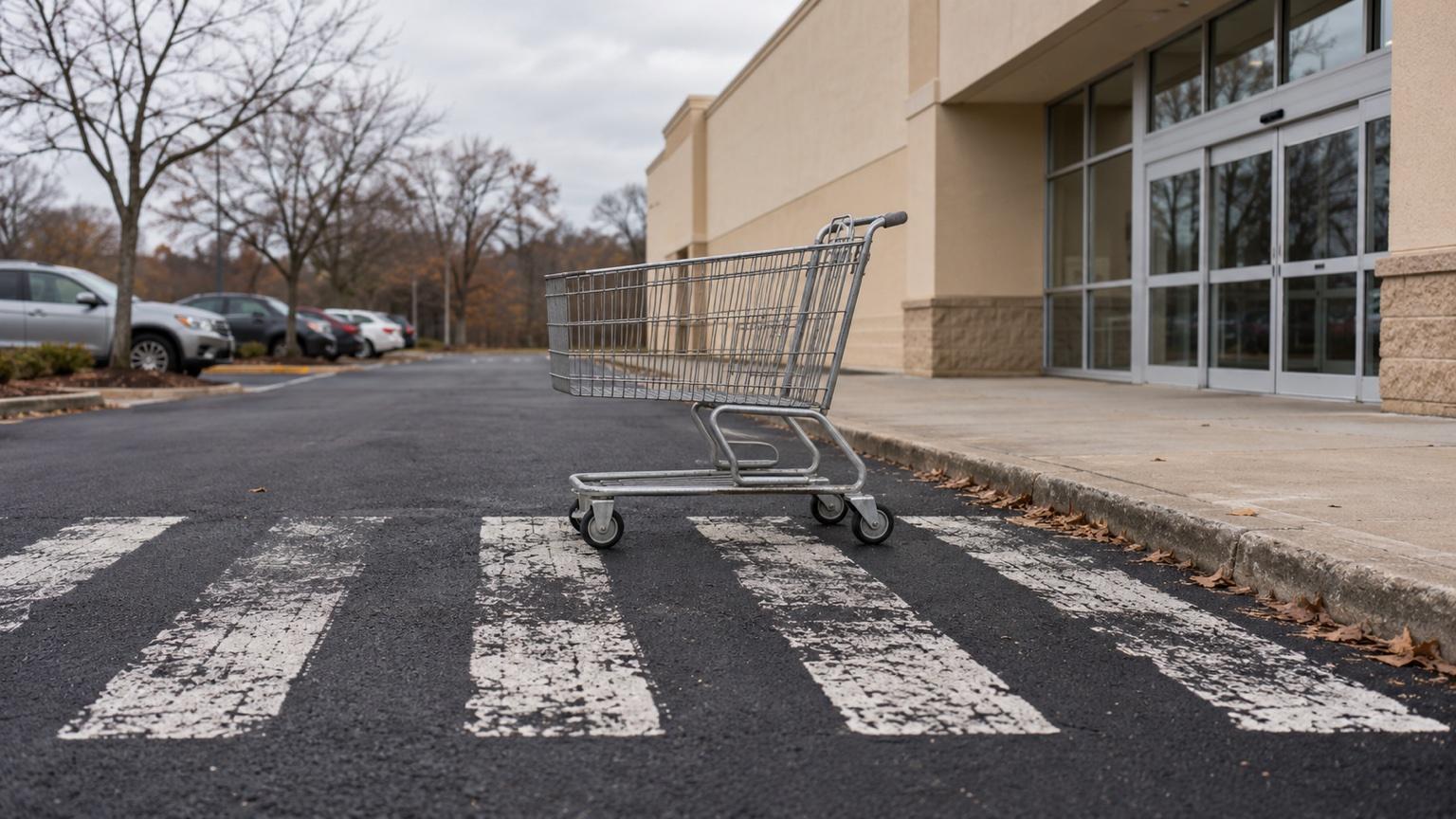
The site plans for the Target store in New Britain called for a yellow line down the middle of the road in front of the entrance. The line was there when the store was built in 2000. By October 2016, when a shopper pushing her cart through the crosswalk was hit by a car, it was gone.
If you were hit by a car in a store's parking lot or crosswalk, the driver may not be the only one who owes you. The business that controls the lot may share the blame too, depending on the circumstances, even for the negligence of a contractor it hired. The Connecticut Appellate Court addressed this issue in Villalobos v. Target Corp., 242 Conn. App. 347 (2026), decided October 20, 2026.
What Happened In The Target Crosswalk In New Britain
The shopper walked out of the main entrance and into the crosswalk. The road there is the only way in and out of the complex, and an engineer for her side put the traffic at about 7,000 vehicles a day. A driver pulled out of a parking aisle, made a wide right turn, and hit her in the northbound lane. She was thrown onto the hood and then to the ground. The store's own surveillance video showed the car "considerably over the center of the roadway" when it hit her.
The store's site plans, certified by the State Traffic Commission, called for a center yellow line. The store stipulated that the line was there in 2000 and gone by 2016. A store representative testified that a vendor had repaved the lot and had not repainted it.
Her claim against the driver settled. Her case against the store went to a jury, which found for the store, and she appealed. The Appellate Court reversed and ordered a new trial, because the trial judge had declined to instruct the jury that a store can answer for its contractor's negligence. The court did not decide that the store was at fault, only that the jury should have been told the rule.
Is A Store Responsible For Its Contractor's Negligence In The Parking Lot?
It may be. A business that possesses and controls its property owes the shoppers it invites there a duty of ordinary care. It can hire someone to do the work, but the legal responsibility stays with the business. Lawyers call this a nondelegable duty.
As the Appellate Court stated the rule, an owner in possession and control of the property that hires a contractor to maintain it is vicariously liable for the contractor's negligence, meaning legally responsible for it, "regardless of whether the property owner actually is at fault or the degree of fault." So a store may answer for a paving company's negligence on its lot. You may not have to show that the store itself was careless about the paving.
Where a landlord and several tenants share one lot, who controls it can be its own question.
Can A Store Owe A Share If The Driver Was Mostly At Fault?
A careless driver does not necessarily take the store out of the case. The court explained that if the jury found that the missing line made the roadway dangerous and contributed to the crash, and that the paving contractor was the negligent one, the rule "would have resulted in some allocation of liability" to the store. That would be so, the court said, even if the driver "bore the lion's share of the blame."
Both the driver's conduct and the condition of the lot can matter, and how the responsibility splits depends on the facts.
First Steps After You Are Hit In A Connecticut Store Parking Lot Or Crosswalk
- Get medical care first.
- Take photos of the spot where you were hit, including the pavement markings, or ask someone to take them for you.
- Ask the store early, and in writing, for its surveillance video, its site plans, and its maintenance and repaving records.
- Treat the store's incident report separately. It is a different document, with limits of its own, explained in this article on store incident reports.
Watch the deadline. Under C.G.S. § 52-584, a Connecticut negligence action generally must be brought within two years after the injury is sustained or discovered, or reasonably should have been discovered, and generally no more than three years after the act or omission complained of. The shopper in this case sued three days before the two-year mark. Do not cut it that close.
LoRicco Law Firm has represented injured people in New Haven since 1956. If you were hit in a store's lot or crosswalk, our personal injury attorneys can look at who controlled the lot and ask for the video, plans, and repaving records early.
Consultations are free, and we can meet evenings or weekends, or come to you if you can't get to our office. Call 203-865-3123 or contact us online to go over what happened to you or your family member.
This article provides general information, not legal advice for a particular case. Reading it does not create an attorney-client relationship.