
New Haven Auto Accident Attorney · November 5, 2026
Hurt As A Passenger In Someone Else's Car? Whose Uninsured Motorist Coverage May Pay In Connecticut
Connecticut's rules generally extend a driver's uninsured motorist coverage to the passengers in a car the driver's liability insurance covers, and a 2026 Appellate Court decision applied that rule to a rental car. The law also sets whose policy pays first and limits how short the deadline to act can be.
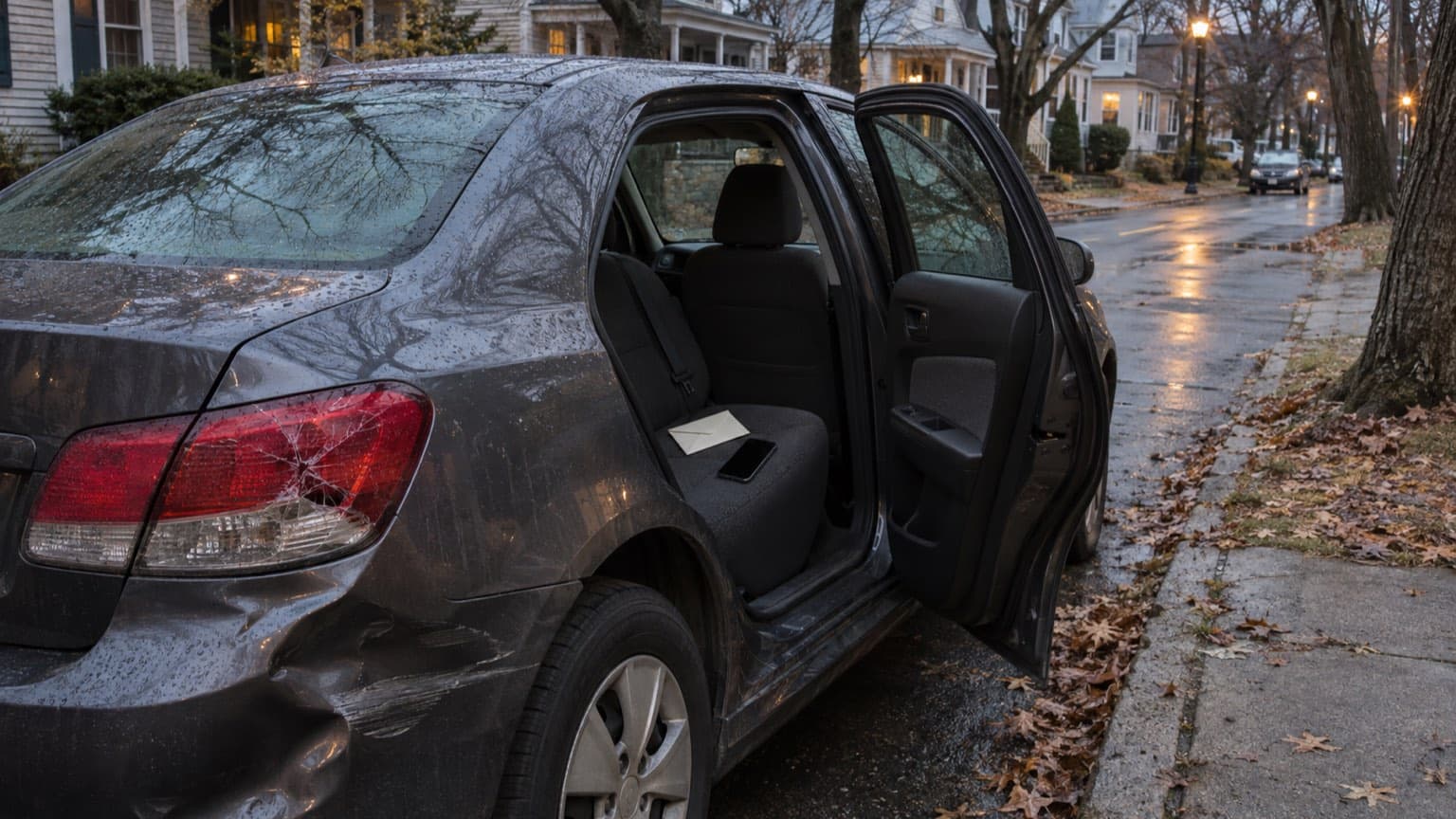
A man calls from East Rock. He was in the back seat of a rental car his brother-in-law was driving on a family trip when another driver ran into them. His neck has not been right since. The other driver had no insurance. The caller does not own a car of his own. His first question is whether anyone's insurance will pay.
The answer may be the driver's own policy. Uninsured motorist coverage is the part of an auto policy that can pay for your injuries when the at-fault driver has no insurance, or too little. Connecticut's insurance regulations say this coverage "shall insure the occupants of every motor vehicle to which the bodily injury liability coverage applies." In plain terms, if the driver's policy covers the car for injuries the driver causes to others, it generally also gives the people riding in that car uninsured motorist coverage. In April 2026 the Appellate Court applied that rule to passengers in a rental car, and in September the Supreme Court declined to review the decision. Whether it helps in a particular case depends on whether the driver's liability coverage applied to the car.
When Uninsured And Underinsured Motorist Coverage May Pay
Uninsured motorist coverage may pay for injuries caused by a driver who has no liability insurance, if you are insured under the policy and have a legal right to compensation from that driver. Underinsured motorist coverage may apply when the injury limits of all the liability insurance that applies, added together, are lower than the uninsured motorist limits of the policy you are claiming under. For example, if the only liability insurance that applies has a $25,000 limit per person, and the policy you are claiming under has a $100,000 uninsured motorist limit per person, the other vehicle is underinsured. For standard underinsured motorist coverage, that comparison decides whether the coverage applies, not how much you can recover. People often call these coverages "UM" and "UIM." In Connecticut, they come as one coverage on a policy, and its limits are usually called the uninsured motorist limits.
Under C.G.S. § 38a-336, every Connecticut auto liability policy must include this coverage for the people it insures. Coverage may also apply when the at-fault driver's insurer becomes insolvent before it pays.
A denial letter from the other driver's insurer does not, by itself, mean the other driver is uninsured. Insurers often dispute fault or what a claim is worth without denying that their policy covers the accident. The statute has a separate deadline rule for when the other vehicle is uninsured because its insurer denied coverage, and the deadlines section below explains it.
Rental Car Passenger Coverage In Toni v. Progressive
In Toni v. Progressive Direct Insurance Co., 238 Conn. App. 522 (2026), two passengers were injured in Boca Raton, Florida, in October 2019, when an underinsured driver rear-ended the rental car they were riding in. According to the opinion, the other driver's insurer denied coverage to the passengers. The rental car's driver had a Connecticut policy with Progressive that included uninsured motorist limits of $100,000 per person and $300,000 per accident. Its liability coverage extended to private passenger cars he rented.
After a trial limited to coverage, the trial court ruled that the passengers were not covered under the Progressive policy, because they did not fit its definition of an "insured person" for uninsured motorist coverage. They did not challenge that reading of the policy on appeal.
The Appellate Court reversed that part of the judgment. It relied on § 38a-336 and on a state insurance regulation, § 38a-334-6(a), which requires uninsured motorist coverage for the occupants of every vehicle the policy's bodily injury liability coverage applies to. Progressive's liability coverage applied to the rental car, so the court held that the law required Progressive to provide uninsured motorist coverage to the passengers. Where a policy's terms are narrower than the law requires, the court said, "the broader coverage required by law controls."
The Supreme Court declined Progressive's request to review the case on September 29, 2026, which leaves the Appellate Court's decision in place. The claims under the Progressive policy went back to the trial court, where fault and damages remained to be decided.
The passengers also sought coverage under a separate commercial policy issued to a company one of them headed. The Appellate Court upheld the ruling against them under that policy: its definitions were clear, and the rental car was neither a covered auto nor a temporary substitute for one.
If you were hurt by an uninsured or underinsured driver while riding in someone else's car, the policy of the person who was driving may cover you, if its liability coverage applied to that car. In Toni, that coverage reached the rental car, so the Appellate Court held that the passengers had uninsured motorist coverage even though the policy's own definitions left them out. So if an insurer tells you that you are not an "insured person" under its policy, that answer may deserve a closer look. The decision does not mean every passenger is covered, and it does not decide fault or how much anyone recovers.
How To Tell Whether The Driver's Policy Covers You
Whether the driver's policy covers you as a passenger starts with his or her liability coverage, the part of the policy that pays for injuries the driver causes to others. If that coverage applied to the car you were in, the rule described above generally gives you uninsured motorist coverage under the same policy.
That will not be true of every policy or every car. Whether liability coverage applies to a borrowed or rented car depends on the policy's own terms and exceptions. This rule comes from Connecticut's insurance regulations, so a policy issued in another state may be governed by that state's law. If the driver's liability coverage did not apply to the car, this rule likely does not give you coverage under the driver's policy. A policy covering the car itself, such as the owner's, may still apply.
To find out, you will need copies of the driver's declarations page, which is the summary page that lists the coverages and limits, and the full policy. If someone else owns the car, you will need the owner's policy too, and for a rental car, the rental agreement. These are other people's documents, so they can be hard to get on your own. A lawyer can help you request them.
Whose Coverage Comes First
More than one policy may provide uninsured or underinsured motorist coverage for your injuries. The car you were riding in may have coverage, and you or someone in your household may have a policy too. C.G.S. § 38a-336(d) sets the order of payment when you are insured for this coverage, you were riding in a car you do not own, and a policy covering that car also provides the coverage:
- the coverage on the car you were in is primary, meaning it pays first;
- coverage under a policy on which you are a named insured, meaning one that lists you by name as a policyholder, is secondary and pays next; and
- other applicable policies are excess and pay after those.
That order does not mean each policy pays its full limit. The limits for coverage on different vehicles are generally not added together. When that rule applies, your total uninsured and underinsured motorist recovery is limited to the highest amount recoverable under any one of the applicable policies. For example, suppose the policy on the car you were in has a $50,000 per-person uninsured motorist limit and your own policy has a $100,000 per-person limit. If both cover your claim and your damages are at least that high, your combined recovery is generally capped at $100,000, not $150,000. That is a ceiling, not a promise that your own insurer will pay the other $50,000.
The Appellate Court has treated one narrow situation differently. In Lane v. Metropolitan Property & Casualty Insurance Co., 125 Conn. App. 424 (2010), an insured with two separate uninsured motorist policies covering the same vehicle was not barred from collecting both limits.
If you were riding in a car you own, the statute generally limits you to the uninsured and underinsured motorist coverage on that car.
How Underinsured Motorist Claims Are Paid
For an underinsured driver, the uninsured motorist insurer generally pays only after all applicable bodily injury liability limits have been exhausted by payment of settlements or judgments, under § 38a-336(b). Exhausted means those limits have actually been paid out, not just offered. The total you recover from all policies, including the at-fault driver's, generally cannot exceed the uninsured motorist limits of the policy you are claiming under. Using the earlier example, if the at-fault driver's insurer pays its full $25,000 and the policy you are claiming under has a $100,000 uninsured motorist limit, the underinsured motorist coverage may pay up to another $75,000, depending on your damages.
Some policies carry optional underinsured motorist conversion coverage in place of standard underinsured motorist coverage. It uses a different test: the other vehicle counts as underinsured if what you receive from or for the at-fault driver is less than your fair, just and reasonable damages. The same payout requirement applies, but under § 38a-336a, conversion coverage is not reduced by what the at-fault driver's insurer pays. In the same example, it could pay up to its full $100,000 limit on top of the $25,000, if your damages are high enough.
That is why the uninsured motorist limits and the type of coverage on each policy matter, and why a settlement with the at-fault driver's insurer should be coordinated with the uninsured motorist claim. For a separate issue involving damage to the car, our article on when your own insurance company jumps the line explains how an insurer's claim to be repaid can affect who gets limited property-damage money first.
Coverage Limits, Arbitration And Work Vehicles
Check how the driver's limits were set. Under § 38a-336(a)(2), a policy issued or renewed since January 1, 1994 must carry uninsured and underinsured motorist limits equal to its bodily injury liability limits, unless a named insured asked in writing for lower limits. Those lower limits cannot go below the state minimum. That written request counts only if the named insured signed an informed consent form containing what the statute requires, including a printed warning. If a policy shows lower uninsured motorist limits, your lawyer can ask for the signed form.
Some claims go to arbitration. Arbitration is a process in which an arbitrator or a panel decides a dispute outside court. If the policy calls for binding arbitration, § 38a-336(c) requires that the arbitration also decide coverage. If the amount demanded is $40,000 or less, one arbitrator decides. A larger demand goes to a panel of three.
Coverage may also apply in a work vehicle. Under § 38a-336(f), if your employer is the named insured and you are hurt while riding in a covered vehicle as part of your job, you are generally covered by your employer's otherwise applicable uninsured and underinsured motorist coverage.
Deadlines For Uninsured And Underinsured Motorist Claims
The policy you are claiming under may set a deadline to sue the insurer or formally demand arbitration, but § 38a-336(g) limits how short that deadline can be:
- In most cases, an insurer may not give you less than three years from the date of the accident to sue or demand arbitration.
- A different rule applies if the other car is uninsured because its insurer denied coverage or became insolvent, meaning it ran out of money to pay claims. Then the policy must allow at least one year from when you receive written notice of the insolvency or coverage denial, so the deadline may come sooner than three years after the accident. A letter disputing fault or the value of your claim does not, by itself, mean this rule applies. If you have a denial letter, have it and the policy reviewed right away.
- For an underinsured motorist claim, you can extend an applicable deadline. Before it runs out, notify the insurer in writing that you may have a claim for underinsured motorist benefits. Then you must sue or demand arbitration under the policy within 180 days after all applicable bodily injury liability limits are exhausted by settlements or final judgments after any appeals.
The three-year and one-year rules are the shortest periods a policy can allow. A policy may give you more time. The 180-day deadline applies when you have used that written-notice procedure to extend your time.
These are two separate claims with two separate deadlines. Your claim against the at-fault driver has its own deadline. Under C.G.S. § 52-584, a negligence claim generally must be brought within two years from when the injury is first sustained or discovered, or reasonably should have been discovered, and no more than three years from the act or omission. Reporting the crash to an insurer is not the same as filing suit or demanding arbitration. Do not wait to read the policy or to act on either deadline.
What A Lawyer Can Do For An Injured Passenger
In a passenger claim, our attorneys can:
- identify the policies that may apply, including the driver's, the car owner's, and policies held by you or relatives you live with;
- request the declarations pages and full policies and, for a rental car, the rental agreement;
- give the insurers written notice of your claims, including the notice that can extend an underinsured motorist deadline;
- handle the adjusters' calls and advise you about requests for recorded statements;
- track the policy deadlines, including any extended deadline for an underinsured motorist claim, and the separate deadline to sue the at-fault driver;
- gather your medical records and bills and document your injuries and other losses;
- coordinate any settlement with the at-fault driver's insurer with your uninsured or underinsured motorist claim; and
- pursue arbitration or a lawsuit when appropriate.
In the meantime, get the medical care you need. Keep every letter you receive from an insurer and note the date it arrived. Talk with a lawyer before you give a recorded statement or sign a release.
Our guide to what to do after a Connecticut holiday accident lists the evidence to preserve in the first days.
If you were hurt as a passenger in New Haven or anywhere in Connecticut, our auto accident attorneys can review what happened and handle the insurance claims for you.
Frequently Asked Questions
- Does the driver's uninsured motorist coverage cover passengers in Connecticut?
- Generally, yes, when the driver's liability coverage applies to the car you were in. Connecticut's insurance regulations say uninsured and underinsured motorist coverage "shall insure the occupants of every motor vehicle to which the bodily injury liability coverage applies." In plain terms, if the driver's policy covers the car for injuries the driver causes to others, it generally also gives the people riding in that car uninsured motorist coverage, even if the policy's own definitions leave passengers out. In Toni v. Progressive Direct Insurance Co., 238 Conn. App. 522 (2026), the Appellate Court applied that rule to passengers in a car the driver had rented, and the Supreme Court declined to review the decision in September 2026. Whether the driver's liability coverage applied to that car depends on the policy.
- If I was a passenger in a rental car, whose insurance pays?
- If the at-fault driver had no insurance or too little, the auto policy of the person driving the rental car you were riding in may cover your injuries, if that policy's liability coverage applies to the rental car. In Toni v. Progressive Direct Insurance Co., 238 Conn. App. 522 (2026), the driver's Connecticut policy extended its liability coverage to cars he rented, so the Appellate Court held that his passengers were entitled by law to uninsured motorist coverage under that policy, even though they did not fit its definition of an insured person. That decision settled coverage, not how much anyone would be paid. If more than one policy applies, including one held by you or a relative you live with, C.G.S. § 38a-336(d) sets the order in which they pay.
- Can I use my own uninsured motorist coverage if I was a passenger in someone else's car?
- Possibly, but generally after the coverage on the car you were in. C.G.S. § 38a-336(d) sets the order of payment when you are insured for this coverage, you were riding in a car you do not own, and a policy covering that car also provides the coverage. The coverage on the car you were in is primary, meaning it pays first. Coverage under a policy on which you are a named insured, meaning one that lists you by name as a policyholder, is secondary and pays next. Other applicable policies are excess and pay after those. That does not mean each policy pays its full limit. Your total uninsured and underinsured motorist recovery is generally limited to the highest amount recoverable under any one of those policies.
- Can I add together the uninsured motorist limits from more than one policy?
- Generally no. C.G.S. § 38a-336(d) says the limits for uninsured and underinsured motorist coverage on two or more vehicles, under the same or separate policies, are not added together for any one accident. If you were riding in a car you do not own, your total uninsured and underinsured motorist recovery is generally limited to the highest amount recoverable under any one of the applicable policies. If you were in a car you own, the statute generally limits you to the coverage on that car. For example, a $50,000 policy and a $100,000 policy generally do not add up to $150,000. In one narrow situation, two separate policies covering the same vehicle, the Appellate Court held that the insured was not barred from collecting both limits in Lane v. Metropolitan Property & Casualty Insurance Co., 125 Conn. App. 424 (2010).
- How long do I have to bring an uninsured motorist claim in Connecticut?
It depends on the policy, but Connecticut law limits how short the deadline to sue or demand arbitration can be. Under C.G.S. § 38a-336(g), in most cases an insurer may not give you less than three years from the date of the accident.
A different rule applies if the other car is uninsured because its insurer became insolvent or denied coverage. Then the policy must allow at least one year from when you receive written notice of the insolvency or coverage denial, so the deadline may come sooner than three years after the accident. A letter disputing fault or the value of your claim does not, by itself, mean this rule applies.
For an underinsured motorist claim, you can extend an applicable deadline by notifying the insurer in writing, before it runs out, that you may have a claim for underinsured motorist benefits. Then you must sue or demand arbitration within 180 days after all applicable bodily injury liability limits are exhausted by settlements or final judgments after any appeals.
These are two separate claims with two separate deadlines. Your claim against the at-fault driver has its own deadline under C.G.S. § 52-584: generally two years from when the injury is first sustained or discovered, or reasonably should have been discovered, and no more than three years from the act or omission. Reporting the crash to an insurer does not meet either deadline.
This article provides general information, not legal advice for a particular case. Reading it does not create an attorney-client relationship.