
New Haven Personal Injury Lawyer · June 3, 2026
Why Summer Is Riskier For New Haven Pedestrians And Bicyclists
Warmer weather, New Haven street changes, and more people walking, biking, and riding scooters can make summer crashes especially serious.
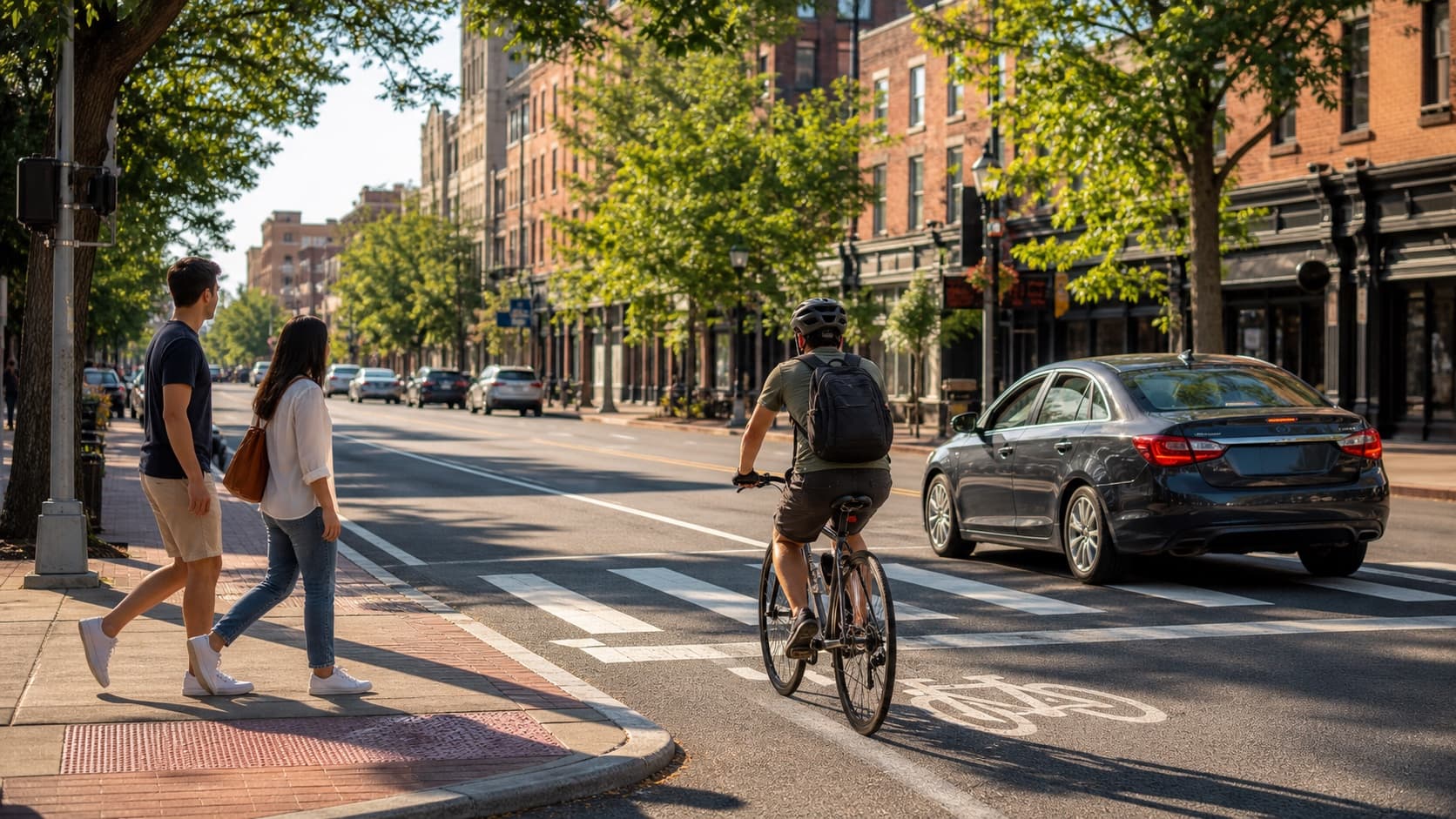
A driver turns through a crosswalk. A bicyclist is already in the bike lane. A pedestrian steps out from between parked cars. In a second, a normal summer day can become an injury claim. These situations become more common in the summer when the sidewalks, crosswalks, and bike lanes are all busier than usual.
As the weather warms up, more of New Haven's daily life moves outdoors. People walk downtown, jog through neighborhoods, ride bikes to work, visit parks, cross streets near restaurants, and move through the areas around Yale and the Green. That is one of the best parts of summer. It also means drivers should expect more people outside the protection of a car, and it helps explain why pedestrian and bicycle safety remains a serious concern.
That concern is reflected in recent Connecticut safety data. According to CTDOT's 2025 traffic fatality summary, overall traffic fatalities decreased in 2025, but bicycle fatalities increased 67 percent and pedestrian deaths rose 6 percent compared with the five-year average. CTDOT also reported more than 1,400 pedestrian crashes in Connecticut in 2024 and 65 preliminary pedestrian fatalities in 2025. The 2025 figures are preliminary and may be updated.
That contrast matters because overall traffic deaths and vulnerable road-user deaths do not always move for the same reasons. A person outside a car does not have a vehicle frame, airbags, or a seatbelt for protection, so speed, distraction, turning movements, poor visibility, and busy intersections can turn an ordinary driving mistake into a serious or fatal crash.
Those statewide numbers are the backdrop. In New Haven, the local risk comes from two things at once: summer puts more people on foot, on bikes, and on scooters, and the city is adding infrastructure that invites even more of them. That can make even a short trip dangerous when people walking, biking, or riding scooters share space with drivers who are turning, parking, checking navigation, or trying to move through traffic.
More People Are Using New Haven Streets Differently
New Haven's street changes are meant to make the city safer and more connected. They also change what a careful driver should expect. Bike lanes, trail connections, scooter stations, traffic-pattern changes, and construction detours can put more people outside cars near downtown intersections, campus areas, restaurant corridors, trail crossings, and commuter routes.
That shift shows up in several recent examples, including the final 1.6-mile New Haven segment of the Farmington Canal Heritage Trail, which reconnects the southern section of the trail toward Canal Dock; New Haven's Safe Routes for All program, which says the city now has more than 35 miles of bicycle lanes; and the city's shared electric scooter program with Veo, launched in 2025 with 300 scooters at 50 stations.
When a pedestrian is hit by an e-bike or electric scooter rather than a car, the insurance investigation may involve household, platform, commercial, or other policies instead of a standard auto liability policy.
To be clear, these changes are good for New Haven, but they change the facts on the street. A driver who used to expect only cars may now need to look for a cyclist in a marked lane, a scooter rider near a station, a pedestrian crossing near a trail connection, or a runner coming through an intersection during early morning or evening hours.
Where Summer Crashes Often Happen
Pedestrian and bicycle crashes in New Haven often happen where movements converge: crosswalks at busy intersections, curbside parking next to bike lanes, turning lanes near restaurants and campus buildings, and streets narrowed by construction or event traffic. In summer, those locations carry more walkers and riders later into the evening, so a driver's small mistake can have serious consequences.
Speed makes all of these situations more serious. A speeding driver has less time to react and needs more distance to stop. For a pedestrian, bicyclist, or scooter rider, the difference between a slower impact and a faster one can be life-changing.
Crosswalks are a common point of conflict. In Connecticut, pedestrians have important rights at marked and unmarked crosswalks, but that does not make every case simple. The location of the crosswalk, the signal timing, the driver's speed, parked cars, construction, and witness accounts can all matter.
Bicycle crashes often turn on visibility and right of way. Was the cyclist in a bike lane? Did the driver check before turning or opening a door? Was the cyclist using lights in low light? Was the road surface broken, blocked, or narrowed by construction? In a New Haven personal injury claim, the legal issue is not just what happened. It is what can be proven.
Why Evidence Matters After A Crash
That proof starts at the scene, where street-level details become evidence. Lane markings, traffic signals, trail crossings, parked cars, sight lines, road defects, construction barrels, lighting, and camera locations can help show whether a driver should have seen the person walking or riding nearby.
Physical evidence matters too. A cracked helmet, torn clothing, bent wheel, broken light, damaged scooter, or scrape marks on the vehicle can show the force and direction of impact. Photos taken before the scene changes can be difficult to replace later.
After a crash, the insurance company may try to turn a complicated street incident into a simple blame story. They may say the pedestrian crossed in the wrong place, the cyclist was hard to see, the scooter rider should have avoided the vehicle, or the injured person was partly distracted. Those arguments should not be treated as the final word.
Shared fault does not automatically mean there is no claim. Under Connecticut's comparative negligence rule, an injured person may still recover compensation if they were not more than 50 percent at fault, though any recovery can be reduced by their share of responsibility. That is why it is important to have the facts reviewed before accepting the insurance company's assignment of blame or relying on an adjuster's conclusion. If the driver's insurance company calls after a pedestrian or bicycle crash, the injured person is not required to give an interview or recorded statement about what happened. A lawyer can deal with those communications instead, before a rushed statement is used to dispute fault, injuries, or damages.
What To Do After A Pedestrian Or Bicycle Accident
If you are hit while walking, biking, or riding a scooter, your first priority should be medical care. Even if you think your injuries are minor, get checked out. Head injuries, soft tissue injuries, and internal injuries are not always obvious right away.
If possible, take these steps:
- Call 911 and make sure the crash is documented
- Get the driver's name, contact information, insurance information, and license plate
- Take photos of the vehicle, bicycle, scooter, injuries, crosswalk, intersection, and road conditions
- Identify witnesses before they leave
- Look for nearby cameras on businesses, homes, buses, or traffic infrastructure
- Keep damaged gear, including helmets, clothing, lights, shoes, bicycles, or scooters
- Do not give an interview or recorded statement to the driver's insurance company before getting legal advice
- Have a personal injury attorney review the case before giving a statement or responding to a settlement offer from the driver's insurance company
The sooner this evidence is preserved, the better. A business may overwrite camera footage. A construction detour may move. A vehicle may be repaired. A bike or scooter may be discarded before anyone realizes it matters.
Why Local Investigation Can Matter
A New Haven pedestrian or bicycle accident is rarely just a diagram on an insurance form. The exact intersection, nearby cameras, traffic-control devices, parking layout, construction activity, lighting, and neighborhood traffic patterns can all affect how fault is evaluated.
Our office can look at those local details, preserve evidence before it disappears, review the police report, identify possible insurance coverage, and respond when an insurance company tries to shift blame onto the injured person. In cases involving a public road, bridge, sidewalk, or state route, early review can also help identify whether a short notice deadline may apply.
How Long Do You Have To File A Claim In Connecticut?
Connecticut generally requires a personal injury lawsuit to be filed within two years from when the injury is first sustained or discovered, or should have been discovered with reasonable care. Connecticut law also sets an outer limit: in most cases, no lawsuit may be brought more than three years after the act or omission that caused the injury.
Shorter deadlines can apply if a defective public road, bridge, or sidewalk played a role. A claim against a city or town, or against the state, may require formal written notice within just 90 days. It is usually better to ask about the timeline early than to assume there is plenty of time.
Staying Safe And Protecting Your Rights
Summer should be a time when people can safely enjoy New Haven on foot, by bike, or by scooter. Drivers can help by slowing down, avoiding distractions, watching carefully before turning, and giving bicyclists enough room. Pedestrians, bicyclists, and scooter riders can help by staying visible, using crosswalks when available, and following traffic signals.
But when a crash does happen, the medical and legal consequences can be serious. If you or a loved one was injured in a New Haven pedestrian accident, bicycle accident, or scooter crash, contact our office for a free consultation or call us at 203-865-3123. We can review what happened, explain your options, and help protect your claim while you focus on healing.
Frequently Asked Questions
- How long do I have after a New Haven pedestrian or bicycle accident?
Connecticut generally gives injured people two years to file a negligence lawsuit from when the injury is first sustained or discovered, or reasonably should have been discovered. In many cases, there is also a separate three-year cutoff measured from the act or omission that caused the injury. Shorter deadlines may apply if a defective public road, bridge, or sidewalk contributed to the crash, including written notice within 90 days for some claims against a city, town, or the state.
- Can I still have a claim if I was not in a crosswalk?
Yes, you may still have a claim. Being outside a marked crosswalk does not automatically end a Connecticut pedestrian injury claim. Fault may depend on the driver's speed, attention, ability to avoid the crash, lighting, sight lines, traffic conditions, and the pedestrian's actions. Because those facts can change the fault analysis, it is worth having the crash reviewed before assuming you cannot recover.
- Who may be at fault if a driver opens a car door into a cyclist?
- A person who opens a vehicle door into moving traffic without checking may be at fault for a resulting bicycle crash. Connecticut law addresses opening or leaving a motor vehicle door open in a way that causes physical contact with moving traffic, and moving traffic includes bicycles, electric bicycles, and electric foot scooters.
- What should I do after a New Haven pedestrian or bicycle accident?
Get medical care, call 911, identify the driver and witnesses, take photos of the vehicles, injuries, crosswalk, bike lane, road conditions, and nearby cameras, and keep damaged gear. Do not give an interview or recorded statement to the driver's insurance company until you understand your rights and the evidence has been preserved. It is also a good idea to have a personal injury attorney review the case before giving a statement or responding to a settlement offer.
This article provides general information, not legal advice for a particular case. Reading it does not create an attorney-client relationship.