
New Haven slip and fall accident · September 22, 2026
Hurt In Your Apartment Building: When The Landlord May Be Responsible
After a fall on shared stairs, a walkway or a parking area, responsibility can depend on who controlled the space and what the landlord knew.
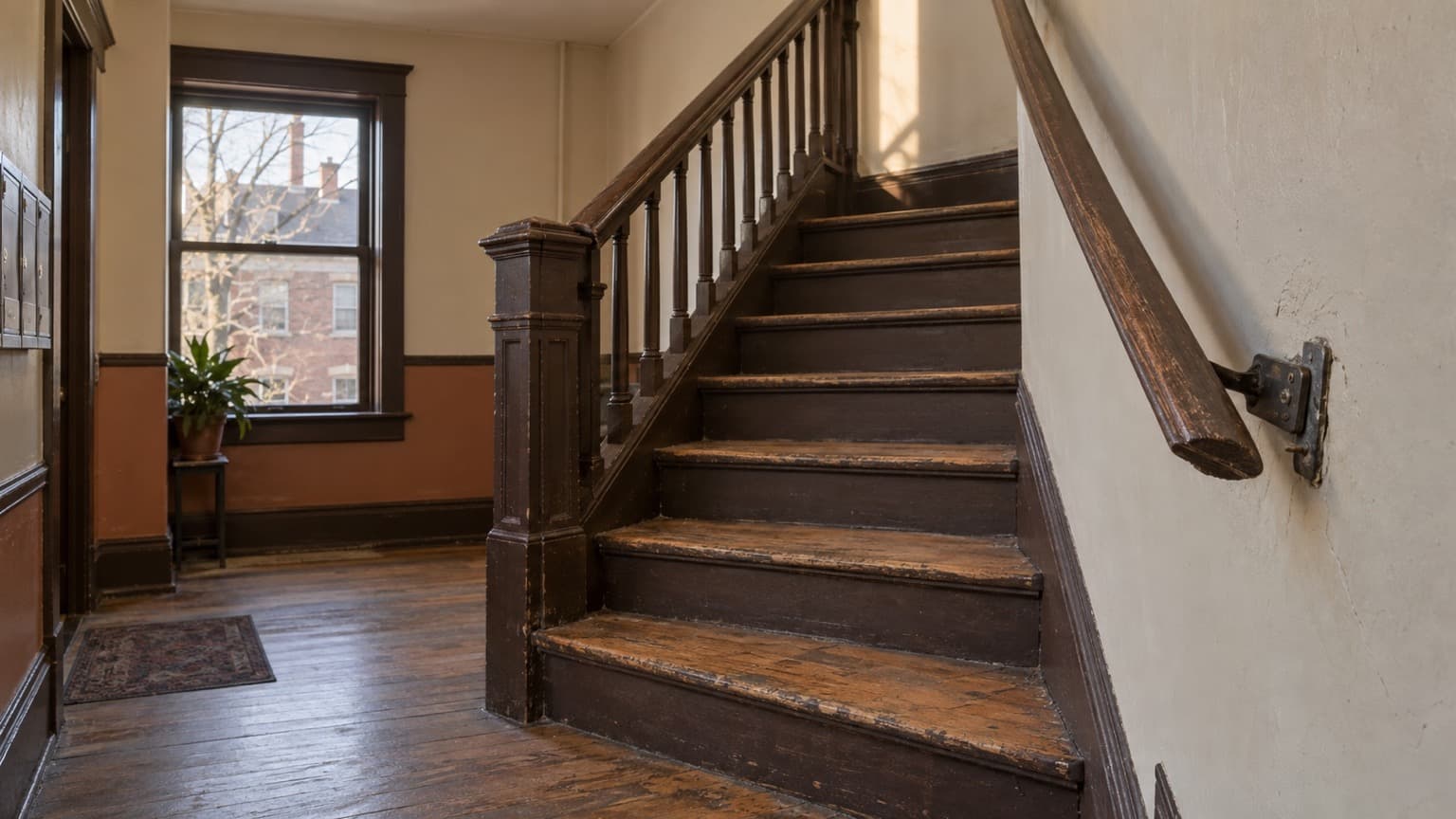
You have taken the same stairs to your apartment in East Rock for months. The handrail moves when you touch it. Then one evening it pulls away as you descend, and you fall.
A landlord may be responsible for a fall in an apartment building's shared space, but being hurt is not enough on its own. Responsibility can depend on who controlled that spot, what made it unsafe, whether the landlord had a fair chance to discover and address the danger, and whether that condition caused your injury.
Start With The Exact Place You Fell
Connecticut law requires residential landlords to keep common areas clean and safe. A common stairwell, hallway or entryway used by several tenants is a different place from the inside of an apartment leased to one tenant. A shared walkway or parking area may also be a common area, depending on how the property is arranged and used.
Connecticut courts also look at control: who had the power to maintain, repair or direct the use of the particular spot? The lease may settle that question. If it does not clearly resolve control, courts look at the surrounding circumstances, including how the building was actually managed. The landlord generally owes reasonable care for areas it retained control over, while a space leased to a tenant for that tenant's exclusive possession usually calls for a different analysis. Cohen v. Postal Holdings, LLC explains that distinction.
Photograph the whole stairwell, then the exact step where your foot landed and the railing that moved. Those details can show which part of the building was involved.
What Did The Landlord Know Before The Fall?
A broken step does not tell you when it broke. A complaint sent three months earlier may. So might a maintenance request, an inspection record or a neighbor who watched the same railing wobble for weeks.
In a Connecticut premises claim, a landlord may have actual notice because someone reported the condition. The landlord may have constructive notice if the defect existed long enough for a reasonable inspection to find it and address it before the fall. The Connecticut Supreme Court described both kinds of notice, and the landlord's reasonable time to fix a defect in an area it controls, in Gore v. People's Savings Bank.
Save the texts, emails and maintenance requests you sent before the fall. An unanswered message in a tenant portal may not remain available, so take a screenshot showing the date, the complaint and where it was sent. If you never complained, that does not automatically end the claim. The condition and the building's inspection history still matter. Even if you knew the railing was loose, that fact alone does not bar a claim. Under § 52-572h, your share of fault can reduce your recovery. It bars recovery only if your share is greater than the combined share of those you seek recovery from, including anyone who settled or was released.
Ice And A Loose Railing Raise Different Questions
In winter, the timing of a fall on an outdoor apartment walkway matters. Under Connecticut's ongoing-storm rule, a property owner generally may wait until a storm ends and for a reasonable time afterward before clearing new snow or ice from outside walks and steps, unless unusual circumstances apply. Carty v. Merchant 99-111 Founders, LLC discusses the rule. Ice left from an earlier storm can be a different issue. Photos taken at the time, earlier complaints and weather records may help establish what was on the ground and when it formed.
The storm rule does not answer every winter fall. In Ocasio v. Verdura Construction, LLC, the Connecticut Appellate Court held that an ongoing-storm instruction did not belong in a case brought over an allegedly defective porch railing rather than a failure to remove ice. A lawyer needs to examine whether the railing, the ice, or both contributed to the fall.
Keep The Evidence That Can Disappear
Get medical care first. Then, if you can do so safely, photograph the condition from close up and far enough back to show the route you took. Record the date and time. Keep the shoes you wore, the names of anyone who saw the fall, and any message you sent about the hazard before or after it.
Report the fall to the landlord or manager in writing. Describe the place and condition without guessing how long it was there. If the building has cameras, ask promptly that footage be preserved; it may be overwritten. Evidence of a later repair generally cannot be used to prove that the landlord was negligent before the fall, although a court may admit it for another purpose, such as showing who controlled the area when that is disputed. We explain the rule in our article on repairs after a fall. Document the condition while it is still there.
C.G.S. § 52-584 generally requires a Connecticut negligence lawsuit to be brought within two years after the injury is sustained or discovered, or reasonably should have been discovered, with a three-year outer limit measured from the act or omission. Service requirements can affect whether your lawsuit is timely.
For an injury on property a housing authority owns or controls, § 8-67 sets a separate two-year limit for bringing a claim against the authority, measured from when the claim arose. Within six months after the claim arose, written notice of your intent to sue, stating when and where you were hurt, must be filed with the authority's chairman or secretary. An incident report to a property manager may not satisfy that requirement.
Either way, have the specific deadlines checked early. Do not wait for the building's insurance company to finish investigating.
If you fell on shared stairs, a walkway or another part of a rental building in Greater New Haven, our slip-and-fall attorneys can review who controlled the area, what records exist and what caused the injury. Contact us for a free consultation.
Frequently Asked Questions
- Can I bring a claim against my landlord if I fell on the shared stairs?
- You may have a claim if a dangerous condition on stairs the landlord controlled caused your injury and the landlord knew or reasonably should have known about it in time to address it. Connecticut law requires residential landlords to keep common areas clean and safe, but a fall alone does not establish negligence.
- What if I never told the landlord the railing was loose?
- A prior complaint can help prove notice, but it is not the only way. The issue may be whether the defect was there long enough for a reasonable inspection to find it in time to address it before you fell. The condition and maintenance records matter. The Connecticut Supreme Court described actual and constructive notice in Gore v. People's Savings Bank.
- Does a landlord have to clear ice while snow is still falling?
- Generally, Connecticut allows a property owner until the storm ends and a reasonable time afterward to clear new snow or ice from outside walks and steps, absent unusual circumstances. Ice that was already there can raise a different question, as can a separate defect such as a broken railing. The timing, source of the ice, and cause of the fall matter. See Carty v. Merchant 99-111 Founders, LLC and Ocasio v. Verdura Construction, LLC.
- What should I save after a fall in my apartment building?
Get medical care, photograph the exact place and condition, and report the fall and hazard to the landlord or manager in writing. Keep earlier texts, emails, maintenance requests, witness names and the shoes you wore. Those records can help show what caused the fall, who knew about the condition, and when.
- How long do I have to sue after an apartment building fall in Connecticut?
- C.G.S. § 52-584 generally requires a Connecticut negligence lawsuit to be brought within two years after the injury is sustained or discovered, or reasonably should have been discovered, with a three-year outer limit measured from the act or omission. For an injury on property a housing authority owns or controls, § 8-67 sets a separate two-year limit for bringing a claim against the authority, measured from when the claim arose. Within six months after the claim arose, written notice of intent to sue, stating when and where the injury happened, must be filed with the authority's chairman or secretary. An ordinary incident report to a manager may not be enough. Have the deadline and any notice requirement checked promptly.
This article provides general information, not legal advice for a particular case. Reading it does not create an attorney-client relationship.