
New Haven slip and fall accident · August 25, 2026
They Fixed The Stairs After I Fell. Does That Prove It Was Dangerous?
Connecticut evidence law generally does not let a later repair prove a property owner was negligent. A 2026 New Haven appellate case shows why what you document at the scene matters more than the cleanup.
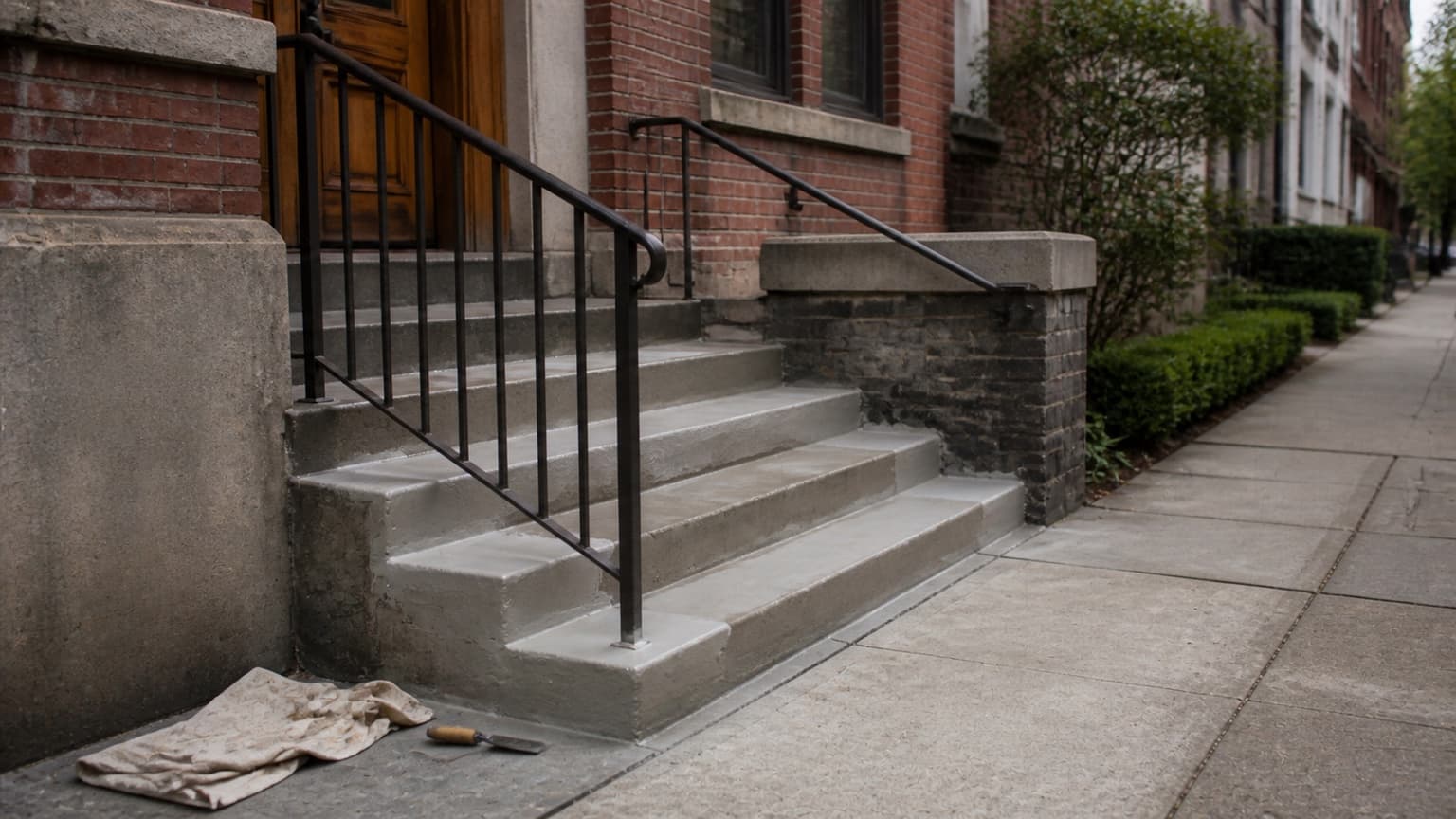
You fell on the stairs outside a business. A week later, the stairs have new treads, a new handrail, and a bright yellow warning sign. Many people assume that repair decides the case: why would the owner fix the stairs if nothing was wrong?
Connecticut evidence law sees it differently. In most cases, an injured person cannot use a later repair to prove the owner was negligent. The repair usually stays out of the case.
That is not the end of a claim. It just means the claim rests on different evidence, and most of that evidence is at its strongest in the first days after a fall.
Why The Law Keeps The Repair Out
Evidence that a hazard was repaired, changed, or improved after an injury is generally not admissible to prove that the owner was negligent or that the condition was defective. Lawyers call this the rule against subsequent remedial measures, set out in Section 4-7 of the Connecticut Code of Evidence. In plain terms, a fix made after the accident cannot be offered as proof that the owner should have made it before.
Connecticut gives two reasons for the rule. First, a later repair says little about whether the owner acted carefully before the fall. Owners fix things for all kinds of reasons, including simple caution after a scare. Second, the law wants dangerous conditions corrected. If every repair could be used in court as an admission of fault, a property owner would have a reason to leave the hazard exactly as it is.
A 2026 New Haven Case Shows How Much This Rule Matters
The rule is not a technicality, and a recent decision from a New Haven case shows what happens when it is crossed.
In Vargas v. Kang Sjuen, LLC, decided in June 2026, a mail carrier was injured in a fall at a property on Whalley Avenue in New Haven. She won her case at a bench trial in the New Haven judicial district. The Connecticut Appellate Court then reversed the judgment and ordered a new trial, because photographs showing the property after repairs had been admitted at trial to prove negligence, which the evidence rules do not allow.
Note what happened there. The injured person did not lose her case; a new trial was ordered. A judgment she had already won, however, was undone, and the case had to start over because the proof leaned on the repair. A plaintiff cannot rely on the repair itself to establish the earlier negligence, and building a case around it carries real risk even when the case is otherwise strong.
When Repair Evidence May Still Come In
The rule has exceptions, and it is worth stating them in the same breath. A court may admit repair evidence when it is offered for some purpose other than proving negligence: for example, when there is a genuine dispute about who owned or controlled the property, when the feasibility of a safer precaution is genuinely contested, or to impeach certain testimony. Whether any of those exceptions applies depends on the facts of the case, and the decision belongs to the court. They are narrow doors, and no one should build a claim on the assumption that one will open.
Document The Condition, Not The Cleanup
If the repair will not carry the case, what matters is the condition of the property at the moment you fell. That evidence can be gone within days, sometimes within hours. So the practical advice is simple. Document the scene, identify the people, and preserve what you can.
- Photograph the hazard and the area around it: the stairs, the lighting, the missing handrail, the worn tread. Get close-ups and wider shots that show where it was.
- Get names. Witnesses, employees who responded, the neighbor who says the step has been loose for months. People scatter, and memories fade.
- Report the fall to the business or landlord, and ask how to obtain the incident paperwork. The store's own report is written for the store, a problem we cover in our article about incident reports after a fall.
Keep the shoes and clothing you were wearing, unwashed, and get medical care promptly. A gap between the fall and the first medical visit may give the insurer an argument that you were not really hurt.
What Actually Proves A Premises Case
A premises claim in Connecticut usually turns on a question lawyers call notice: whether the owner created the hazard or knew or should have known about it in time to fix it before you fell.
That question is answered with evidence that has nothing to do with the later repair: how long the condition existed, inspection and maintenance records, prior complaints about the same stairs, building-code issues, and camera footage. Many camera systems overwrite footage within days. A lawyer looks past the repair because the maintenance history may matter far more than the fact that the hazard was later fixed. A stairway that generated complaints for a year tells a very different story from one that failed without warning.
While the repair itself usually stays out of the case, the records that surround it often do not, and a timely request can preserve them before they disappear.
One caveat about where you fell. A fall caused by a defective public sidewalk or road may follow different rules, including a written-notice deadline that can be as short as 90 days depending on who is responsible for the defect. We explain those separate rules in our article about notice deadlines for injury claims involving New Haven roads and sidewalks.
If You Fell At A Business Or Rental Property In New Haven
Do not assume the repair ended your case, and do not assume it won your case either. If you fell at a business or rental property in the New Haven area and are unsure what your claim rests on now that the hazard is fixed, our New Haven slip-and-fall attorneys can review what happened. Contact our office for a free consultation. We can identify what evidence still exists, ask that it be preserved, and explain the deadlines that apply.
Frequently Asked Questions
- The store fixed the hazard right after my fall. Does that prove my case?
No. Connecticut evidence law generally does not allow a later repair to prove that a property owner was negligent. For example, in 2026, the Connecticut Appellate Court ordered a new trial in a New Haven case because photographs of post-fall repairs had been admitted for that purpose. What usually matters far more is the condition at the time of the fall, whether the owner knew or should have known about the hazard, and the property's maintenance history.
- Why does the law keep repair evidence out?
Two reasons. First, a later repair usually says little about whether the owner acted carefully before the fall. Second, the rule encourages owners to fix dangerous conditions promptly, without worrying that the repair itself will be used against them as an admission of negligence.
- Is repair evidence ever allowed in a Connecticut premises case?
Sometimes, but only for limited purposes. Those purposes may include proving ownership or control when either is genuinely disputed, showing the feasibility of a safer alternative when that issue is genuinely contested, or impeaching certain testimony. Whether an exception applies depends on the facts of the case, and that decision belongs to the court. These are narrow doors, not a workaround.
- What should I document after a fall if the repair will not help me?
Photograph the hazard and the surrounding area before anything changes, get the names of witnesses and employees, and report the fall to the business or landlord. Get medical care promptly, both for your health and because medical records can document your injuries and when your symptoms began. Keep the shoes and clothing you were wearing, unwashed. The condition that caused your fall can be gone within days, and the sooner this evidence is preserved, the better.
- How long do I have to bring a Connecticut slip and fall claim?
- Under C.G.S. § 52-584, a Connecticut negligence claim generally must be brought within two years after the injury is sustained or discovered, or reasonably should have been discovered, with a three-year outer limit measured from the act or omission. Shorter clocks can apply. A fall caused by a defective public sidewalk or road may require formal written notice within 90 days. The safest step is to have the deadlines checked early.
This article provides general information, not legal advice for a particular case. Reading it does not create an attorney-client relationship.