
New Haven Auto Accident Attorney · October 8, 2026
Hit A Deer In Connecticut? What To Do And Which Insurance May Pay
DEEP says Connecticut's deer breeding season runs from late October through late December. What to do after hitting a deer, which coverage may pay, and when someone hurt may have a claim.
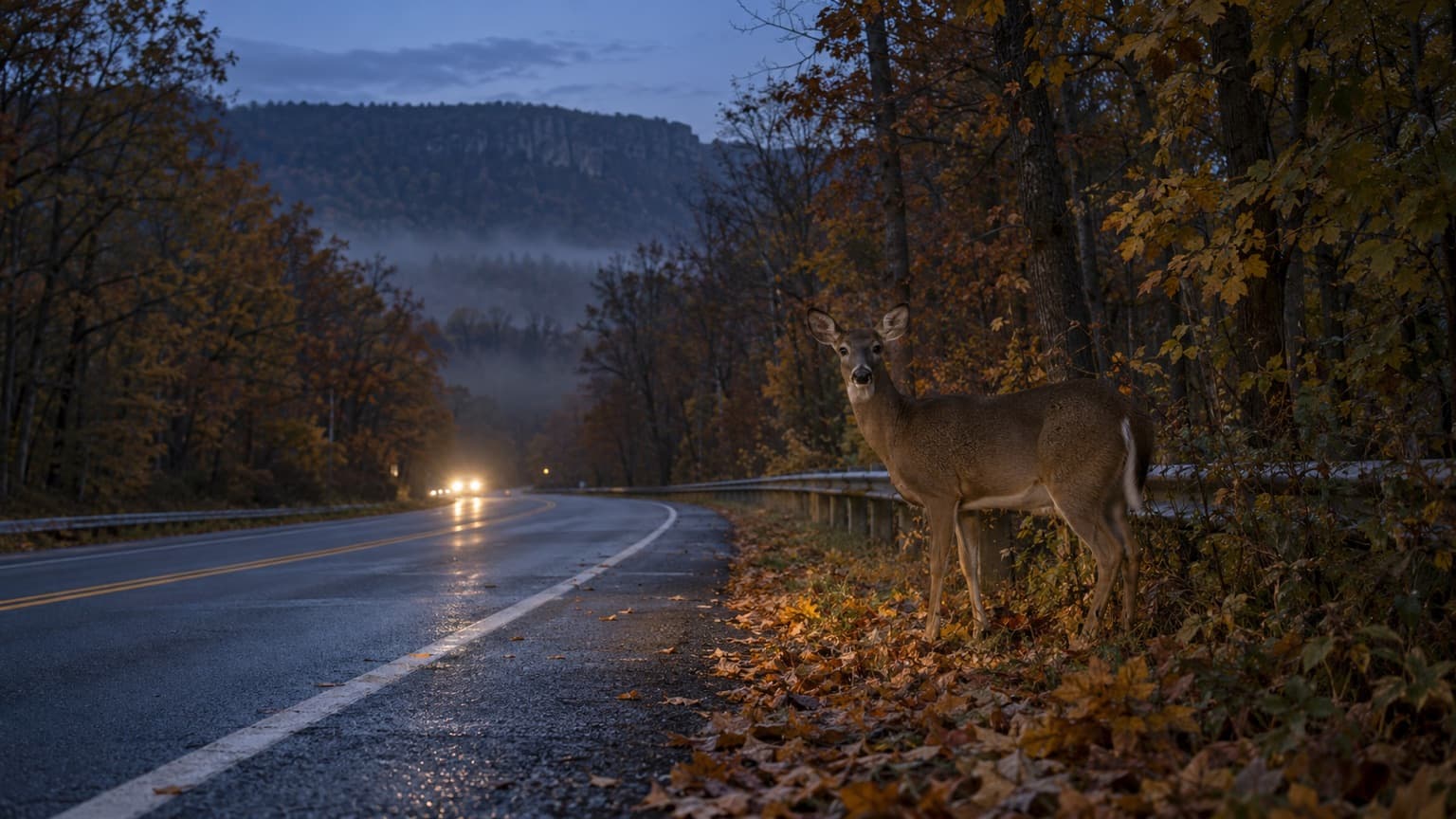
The call usually comes the next morning. Someone was driving home on the Wilbur Cross Parkway near West Rock after dark, a deer came out of the trees, and the car is now at a body shop with a crushed front end. They have two questions. Will my insurance pay for this? And should I have called the police?
The short answers are usually yes, if you have comprehensive coverage, and yes, the police or the state's conservation officers should hear about it. The longer answers depend on your policy, on whether anyone was hurt, and on whether a second car got involved. Those are the cases where a deer collision can turn into an injury claim.
Why Fall Is Deer Season On Connecticut Roads
Connecticut's Department of Energy and Environmental Protection (DEEP) says the breeding season for white-tailed deer, known as the rut, runs from late October through late December. Deer move more during those weeks and are more likely to cross roads, especially in the early morning and evening.
DEEP says about 1,500 deer-vehicle accidents were reported to it and the state Department of Transportation in 2022, and it estimates that about 7,500 deer may actually be struck on Connecticut roads each year, because many strikes are never reported. Based on reports, DEEP says about 6 to 7 percent of accidents involving a deer cause human injuries, and five people died in deer-vehicle accidents in Connecticut from 2014 through 2023.
Moose are rarer but more dangerous. DEEP says September through October is the peak breeding season for Connecticut's small moose population, which lives mainly in the northern part of the state, and that a struck moose often ends up hitting the windshield. According to DEEP, 56 moose-vehicle accidents were reported in Connecticut between 1995 and 2023.
What To Do Right After You Hit A Deer
The Connecticut Insurance Department recommends moving your car to a safe place if you can and turning on your hazard lights. On a limited access highway such as I-91 or I-95, Connecticut law goes further. If the crash caused only property damage, C.G.S. § 14-224(d) generally requires you to move the car off the traveled lanes to an adjacent untraveled area, as long as you can do that without risking more damage or injury.
Then:
- Stay away from the deer. The Insurance Department warns that a frightened or wounded animal can lash out and hurt you.
- If the crash hurt someone else or damaged someone else's property, such as another car, a guardrail or a fence, Connecticut law requires you to stop, give any help that is needed, and give your name, address, operator's license number and registration number to the person hurt, the property owner, or a police officer or witness. If you cannot give that information to any of them, C.G.S. § 14-224(b) requires you to report the crash to the police right away.
- Call 911 if anyone is hurt, if your car cannot be moved, or if the deer is blocking traffic.
- Report the collision. DEEP says all deer and moose vehicle collisions should be reported to local or state police or to DEEP's Environmental Conservation Police. DEEP's 24-hour dispatch line is 860-424-3333.
- If you can do so safely, take photos of the car, the road, the area where the deer came from, and any injuries.
- Get the names and contact information of any witnesses.
- If you did not make the report DEEP recommends at the scene, contact local police or DEEP's dispatch line promptly. That does not replace any immediate report the law requires under step 2.
Do not take the deer home on your own. Under C.G.S. § 26-86, a deer killed or seriously wounded in a collision may become the driver's property only after local police, state police or a conservation officer inspects it and a wildlife kill incident report is issued.
Which Coverage Pays For The Car
According to the Insurance Department, damage from hitting an animal is generally covered under the optional comprehensive part of an auto policy, and a policy with only liability coverage, or liability plus collision, will not pay to fix your car after an animal strike. Your own policy's wording controls, so check your declarations page and ask your insurer. If you swerved and hit a tree, a guardrail or another car without hitting the deer, ask your insurer which part of your policy applies.
Connecticut requires auto policies to include liability coverage and uninsured and underinsured motorist coverage. Comprehensive and collision are not required by law, so whether you have them depends on what you bought. If your car is financed or leased, the lender may have required them.
A comprehensive claim still carries your comprehensive deductible. Check your deductible, and ask your insurer how it handles repair estimates. Do not wait for an estimate to notify your insurer. If you are worried about how a claim may affect your premium, ask your insurer directly.
Who Pays For Injuries
If you were alone in the car. A wild deer has no owner with an insurance policy behind it. Your own health insurance may pay your medical bills. If you bought medical payments coverage, an optional coverage under Connecticut auto policies (C.G.S. § 38a-334), it may also help with medical expenses. Check whether your policy has it and what its limit is.
If you were a passenger. A deer darting into the road does not by itself make the driver at fault. But a passenger may have a claim against the driver if careless driving contributed to the passenger's injuries, for example by speeding on a wooded road at night, ignoring a deer crossing sign, or looking at a phone. That claim would usually go to the driver's liability insurer, which may pay a covered claim, subject to the policy's terms and limits. Many passengers are family members or friends of the driver, which can make deciding whether to bring that claim a hard call.
If a second car was involved. A deer collision can become a two-car crash when a driver reacts to the deer. A driver may swerve into the next lane to avoid the deer, brake hard and be rear-ended by the car behind, or hit the deer and spin into oncoming traffic. In those crashes, an injury claim turns on who was at fault.
Connecticut uses comparative negligence, which means fault can be divided among the drivers involved. Under C.G.S. § 52-572h, an injured person can still recover as long as their share of the fault is not greater than the combined fault of the people they seek to recover from, including settled or released parties. Their damages, however, are reduced by their own percentage, and if they are found more at fault than the others combined, they recover nothing.
The driver who swerved may argue that the deer created a sudden emergency. Connecticut's civil jury instruction on sudden emergency treats that as a factor in deciding whether the driver acted reasonably, not as an automatic excuse. The emergency cannot have been caused by the driver's own conduct, and the driver still must choose a course of action a reasonable person would have chosen. If a jury finds all of that, the driver would not be negligent. If not, the driver may be. Speed, following distance, lighting, the road and what the driver could see can all matter. The Insurance Department's own advice is that if you cannot avoid hitting a deer, try not to swerve, because swerving can send a car into a tree or oncoming traffic.
If you were in the other car, you may have a claim against a driver whose careless driving caused the crash. Swerving or braking for a deer does not by itself establish fault, and you should expect that driver's insurer to point to the deer. Whether that argument works depends on what the evidence shows about the other driver's speed, attention and choices in the seconds before the crash. If you rear-ended a driver who braked for a deer, expect questions about your own speed and following distance.
Protect Your Claim In The Days After
Get checked out if anything hurts or feels wrong, even if you felt fine at the scene.
Notify your own insurer promptly, and check your policy for its notice requirements. Keep the claim number, the repair estimate, the police or DEEP report information, your photos and your medical records together. While it is fresh, write down the time, your speed, the lighting and weather, and where the deer came from. Those details are easy to lose and hard to reconstruct months later.
The other driver's insurer may call and ask you for a recorded statement. Talk with a lawyer before you agree to give one.
If another driver caused the crash and your own insurer pays for your repairs, your insurer can usually try to get that money back from the other driver's insurer. That can become a problem when the other driver's property-damage coverage is limited. You may still have losses your insurer did not pay, such as the car's lost value or the cost of a rental, and there may not be enough coverage left to pay both you and your insurer. Connecticut's make-whole rule generally lets you be paid first in that situation, though the wording of your policy can change that. Our earlier article on what to do after a holiday crash also covers the evidence that matters in the first few days.
If you or a passenger was hurt in a crash involving a deer, especially one where another car was involved, our auto accident attorneys can review what happened and explain your options. Contact our office for a free consultation.
Frequently Asked Questions
- Does car insurance cover hitting a deer in Connecticut?
- Usually only if you carry comprehensive coverage. According to the Connecticut Insurance Department, damage from an animal strike is generally covered under a policy's optional comprehensive portion, and a policy with only liability coverage, or liability plus collision, will not pay to repair your car after an animal strike. You still pay your comprehensive deductible. Your own policy's wording controls, so check your declarations page and ask your insurer.
- Do I have to report hitting a deer in Connecticut?
- You should, and if the crash also hurt someone else or damaged someone else's property, Connecticut law imposes its own duties. Connecticut's Department of Energy and Environmental Protection (DEEP) says all deer and moose vehicle collisions should be reported to local or state police or DEEP's Environmental Conservation Police; its 24-hour dispatch number is 860-424-3333. If someone else was hurt or someone else's property, such as another car or a guardrail, was damaged, C.G.S. § 14-224(b) requires you to stop and give your information to the person hurt, the owner, or a police officer or witness, and to report the crash to the police right away if you cannot. Call 911 if anyone is hurt, if your car cannot be moved, or if the deer is blocking traffic. A police report can also help with an insurance claim.
- Can I keep a deer I hit with my car in Connecticut?
- Possibly, but only if the deer was killed or seriously wounded, an officer inspects it, and a wildlife kill incident report is issued. Under C.G.S. § 26-86, a deer killed or seriously wounded in a collision may become the property of the driver, or of another person if the driver declines it, after local police, state police or a conservation officer inspects it and a wildlife kill incident report is issued. Do not load a deer into your car before that happens.
- I swerved to miss a deer and hit another car. Am I at fault?
- Not automatically, and not automatically excused either. Connecticut's civil jury instructions treat a sudden emergency as a factor in deciding whether a driver acted reasonably. A jury may find the driver was not negligent if an emergency really existed, the driver did not cause it, and the driver chose a course a reasonable person would have chosen. It may find the driver negligent if any of those is missing. Speed, distance, lighting and what the driver could see all matter. Because Connecticut's comparative negligence rule can divide fault, talk with a lawyer before you agree to give a recorded statement to the other driver's insurer.
- I was a passenger when the driver hit a deer. Can I make a claim?
You may, if the driver's careless driving contributed to your injuries, for example by speeding or looking at a phone. A deer running into the road does not by itself make the driver at fault, so the facts matter. A passenger's claim would usually be made against the driver's liability coverage, and your own health insurance and any medical payments coverage may help with bills in the meantime.
This article provides general information, not legal advice for a particular case. Reading it does not create an attorney-client relationship.