
New Haven Auto Accident Attorney · August 18, 2026
When Your Teen Crashes The Family Car: How Connecticut's Family Car Doctrine Works
In Connecticut, a vehicle owner may be responsible for a family member's negligent driving when the family car doctrine applies. Connecticut General Statutes § 52-182 creates a rebuttable presumption about family use and authority, but it does not by itself prove negligence, causation, or damages, or guarantee insurance coverage.
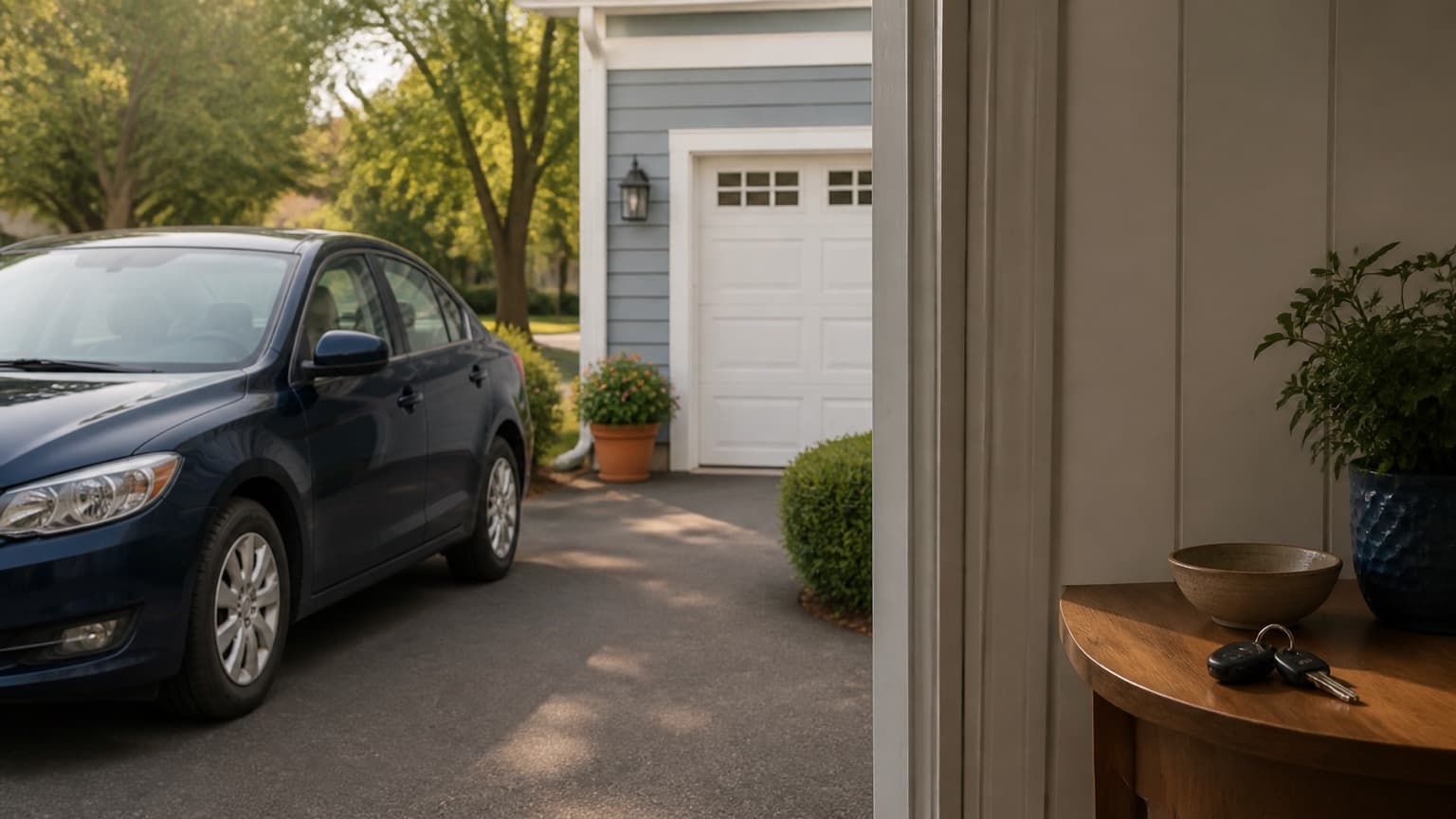
Connecticut General Statutes § 52-182 creates a rebuttable presumption about family use and authority when a motor vehicle is operated by the owner's spouse, parent, or child. This means the law starts by treating the vehicle as a family car being used with the owner's general authority, but the owner can challenge that conclusion. That presumption can matter after a crash, but it does not automatically make the owner liable.
The question often arrives with a new license, a family sedan, and a parent wondering what happens if the car is involved in a crash on Whalley Avenue or another New Haven street. The answer depends on more than whose name is on the registration. It depends on how the car was maintained, who had authority to use it, whether the driver was negligent, and what insurance policies may respond.
How The Family Car Doctrine And Section 52-182 Fit Together
Connecticut's family car doctrine is a common-law rule. In general terms, an owner who maintains a car for the general use and convenience of the family may be responsible for a family member's negligent driving when that family member has general authority to use the car and is using it for a family purpose.
Section 52-182 is a rule of evidence that helps with one part of that question. If the operator is the owner's spouse, parent, or child, proof of that relationship raises a presumption that the vehicle was being operated as a family car within the scope of general authority from the owner. The defendant has the burden of rebutting that presumption.
That distinction matters. The statute does not create universal parental liability for every crash involving a teenager. It does not prove that the teenager drove negligently. It does not establish that the driver's conduct caused the injury. It does not decide the value of the injured person's losses. It does not guarantee that an insurance company will cover the claim.
The Connecticut Judicial Branch's Civil Jury Instruction 3.7-23 describes the owner as potentially liable to the same extent as the driver unless the owner proves that the driver was not authorized to drive the vehicle. The exact instruction and the evidence needed in a particular case depend on the claims and facts before the court.
What The Presumption Changes After A Crash
Without the presumption, an injured person may have to develop evidence about family use and the driver's authority from the beginning. With the presumption, proof that the driver is the owner's spouse, parent, or child shifts that part of the case to the owner. The owner then has to rebut the presumption, and simply offering some contrary evidence is not enough.
The presumption stays in place unless the judge or jury finds proven facts that call into question whether the car was being used as a family car within the owner's general authority. Simply presenting contrary evidence is not enough; the judge or jury must believe it and find it sufficient to raise that question. Once that happens, the presumption no longer applies. The injured person must then prove family-car use and authority from the established facts, without relying on the presumption. The Connecticut Supreme Court explained this in Jancura v. Szwed, 176 Conn. 285, 290 (1978), and Dibble v. Wolff, 135 Conn. 428, 432-33 (1949).
The Appellate Court's decision in Chen v. Bernadel describes the underlying doctrine in practical terms. It discusses a car maintained for the general use and convenience of the family, a family member with general authority to drive, and use for the pleasure or convenience of the family or an individual family member. The court also emphasized the importance of the owner's control over the vehicle and the factual findings made in the case.
The family relationship is important evidence. It is not the entire case.
The Driver's Negligence Still Has To Be Proved
A parent does not become responsible simply because a teenage driver made contact with another vehicle. The injured person still has to prove the underlying motor-vehicle claim.
That usually means establishing that the driver failed to use reasonable care, that the failure caused the crash, and that the crash caused legally recoverable losses. A police report, a citation, photographs, witness accounts, phone or vehicle data, and medical records may each become part of that analysis. The useful evidence depends on what happened.
The family car doctrine may add another potentially responsible party. It does not remove the need to prove what the driver did wrong or what the injury cost. It does not make the same injury worth twice as much. The question is who may be responsible for the same proven losses.
Connecticut's comparative-negligence rules can also affect a claim. The injured person's own conduct may become part of the case, depending on the evidence. A family-car analysis is one part of a motor-vehicle injury case, not a substitute for the full negligence analysis.
A separate rule protects the owner in one situation: when the owner is the one who was hurt. Suppose a parent who owns the car is riding with their teen, and another driver helps cause a crash. The parent may have a claim against that other driver. Under § 52-572h(m), the family car doctrine cannot by itself be used to count the teen's negligence as the parent's own fault and reduce or defeat that claim. Lawyers call that imputing negligence. The parent's own careless conduct can still count against the parent. This rule does not generally stop an injured stranger from holding a parent-owner responsible for the teen's driving when the family car doctrine applies. The Connecticut Supreme Court discussed the earlier version of this rule in Nowak v. Nowak, 175 Conn. 112, 125-27 (1978).
What Parents Should Review Before Handing Over The Keys
The best time to think about the family car doctrine is before a crash. Three practical reviews are worth making.
First, look at the liability limits on the policies covering the household's vehicles. A serious injury can involve more medical care, lost income, and long-term consequences than a family expects when a new driver starts using the car.
Second, ask an insurance professional whether additional coverage is appropriate for your household. The answer depends on the vehicles, drivers, assets, policy language, and exclusions. The Connecticut Insurance Department also advises discussing appropriate liability limits with an insurance agent or advisor. A lawyer can explain a legal exposure after an accident, but an insurance professional should explain the available products and underwriting questions before one.
Third, set clear household rules. Decide who may drive the car, when the car may be used, who may ride in it, and what happens if the rules are ignored. Written rules are not a legal guarantee, and they do not answer every question about authority. They are still better than leaving the family to reconstruct its expectations after a crash.
The goal is not to frighten parents away from letting a qualified teen learn to drive. It is to understand that ownership, family use, authority, and coverage can matter at the same time.
If A Teen Driver Hit You, Investigate The Owner And The Policies
An injured person may focus on the young driver because that is the person who was behind the wheel. The investigation should usually go further.
Find out who owns the vehicle. Confirm the driver's relationship to that owner. Ask whether the car was a household vehicle, whether the driver regularly used it, and what permission or general authority existed. Preserve the crash report, photographs, witness information, vehicle records, and medical documentation.
Then identify every policy that may apply. The other driver's liability policy may be only part of the coverage picture. A policy covering the vehicle owner, another household vehicle, or the injured person's own vehicle may raise separate questions. The answer depends on applicable law, the particular policy language, the vehicles involved, the people insured, and the facts of the crash.
Our Connecticut Memorial Day crash guide explains several early evidence-preservation steps after a motor-vehicle collision. Our discussion of Connecticut's make-whole rule addresses a different insurance issue that can arise when available funds do not cover every loss. Those articles do not replace a policy review in a particular case.
The Family Relationship Has Limits
Section 52-182 names the owner's spouse, parent, and child. It does not say that every relative creates the same presumption. A friend, cousin, roommate, or unrelated permissive driver raises a different set of questions.
Household facts can matter too. An adult child living outside the family household may not fit the same family-use analysis as a child who lives at home and regularly uses a family vehicle. The Connecticut Supreme Court held that the doctrine did not reach a married son who lived in his own household with his wife, even though he was the owner's son. See Hunt v. Richter, 163 Conn. 84, 88-91 (1972). But a driver from outside the household is not always outside the doctrine. In Dibble v. Wolff, 135 Conn. at 434-35, a married daughter who lived elsewhere was driving her mother. The mother could not drive herself but had authority to use the family car. The Connecticut Supreme Court upheld the owner's liability. The result turns on the evidence, including the owner's maintenance of the car for family use, the owner's control, the driver's authority, and the purpose of the trip.
The statute also creates a family-boat presumption for motorboats. That is a separate statutory application, not a rule that every boating injury follows the same analysis as a car crash. The law that governs the boating claim, the operator's negligence, causation, damages, authority, and the facts still matter. Our boating liability article explains the motorboat crossover in its own context.
Two Different Questions For Two Different Readers
For a parent, the practical question is what the household should understand before a newly licensed driver begins using the family car. Review the policies, ask the coverage questions, and set clear expectations.
For an injured person, the practical question is whether the driver is the only person and policy worth investigating. Usually, that answer should not be assumed. The titled owner, family relationship, household use, authority, and insurance documents may all matter. Coverage depends on the policy language, applicable law, and the facts.
If you were injured in a Connecticut crash involving a family vehicle, our New Haven auto accident attorneys can review what happened, identify the potentially responsible parties, and explain what evidence and coverage questions deserve attention. Contact our office for a free consultation at 203-865-3123.
Frequently Asked Questions
- Am I responsible if my teenager crashes my car in Connecticut?
- You may be. The family car doctrine can make an owner responsible when the car is maintained for family use and a family member negligently drives it within the owner's general authority. For the relationships named in Connecticut General Statutes § 52-182, the statute creates a rebuttable presumption about family use and authority. It does not, by itself, prove negligence, causation, or damages, or guarantee insurance coverage.
- What is the family car doctrine in Connecticut?
It is a common-law rule under which an owner who maintains a car for the general use and convenience of the family may be responsible for a family member's negligent driving when the required family-use and authority facts are present. Connecticut General Statutes § 52-182 is the related evidentiary statute. It shifts the burden on the question of family use and general authority for an owner's spouse, parent, or child, but it does not make every family-car owner automatically liable.
- Does the same family car presumption apply to motorboats?
- Yes. Connecticut General Statutes § 52-182 expressly covers a motorboat operated by the owner's spouse, parent, or child, and creates a presumption that the boat was being operated as a family boat within the owner's general authority. Whether the owner is responsible still depends on the law that governs the boating claim, the operator's negligence, causation, damages, and the facts about authority and control. Our guide to Connecticut's new boating liability rules discusses that separate motorboat application.
- If a teenager hit me, should I investigate the vehicle owner too?
Yes. Identify the titled owner, the driver's relationship to that owner, whether the car was maintained for family use, what permission or general authority existed, and every policy that may apply. The driver's negligence, causation, and your damages still have to be proved. Insurance coverage is a separate question that depends on the policy language, applicable law, and the facts.
- What should parents review before a teen starts driving the family car?
Review the household's liability limits, ask an insurance professional whether additional coverage is appropriate, and set clear rules about who may use the car, when, and for what purpose. Those steps cannot guarantee that a crash will not happen or eliminate every legal question, but they can help your family understand the financial exposure before the keys change hands.
This article provides general information, not legal advice for a particular case. Reading it does not create an attorney-client relationship.