
New Haven slip and fall accident · October 15, 2026
Hurt At An Orchard, Corn Maze Or On A Fall Hike? Whether You Paid To Get In Can Matter
Connecticut's recreational use law can limit what landowners owe people who use their land free for recreation. What paying admission can change, and the receipts, photos and deadlines that matter after a fall.
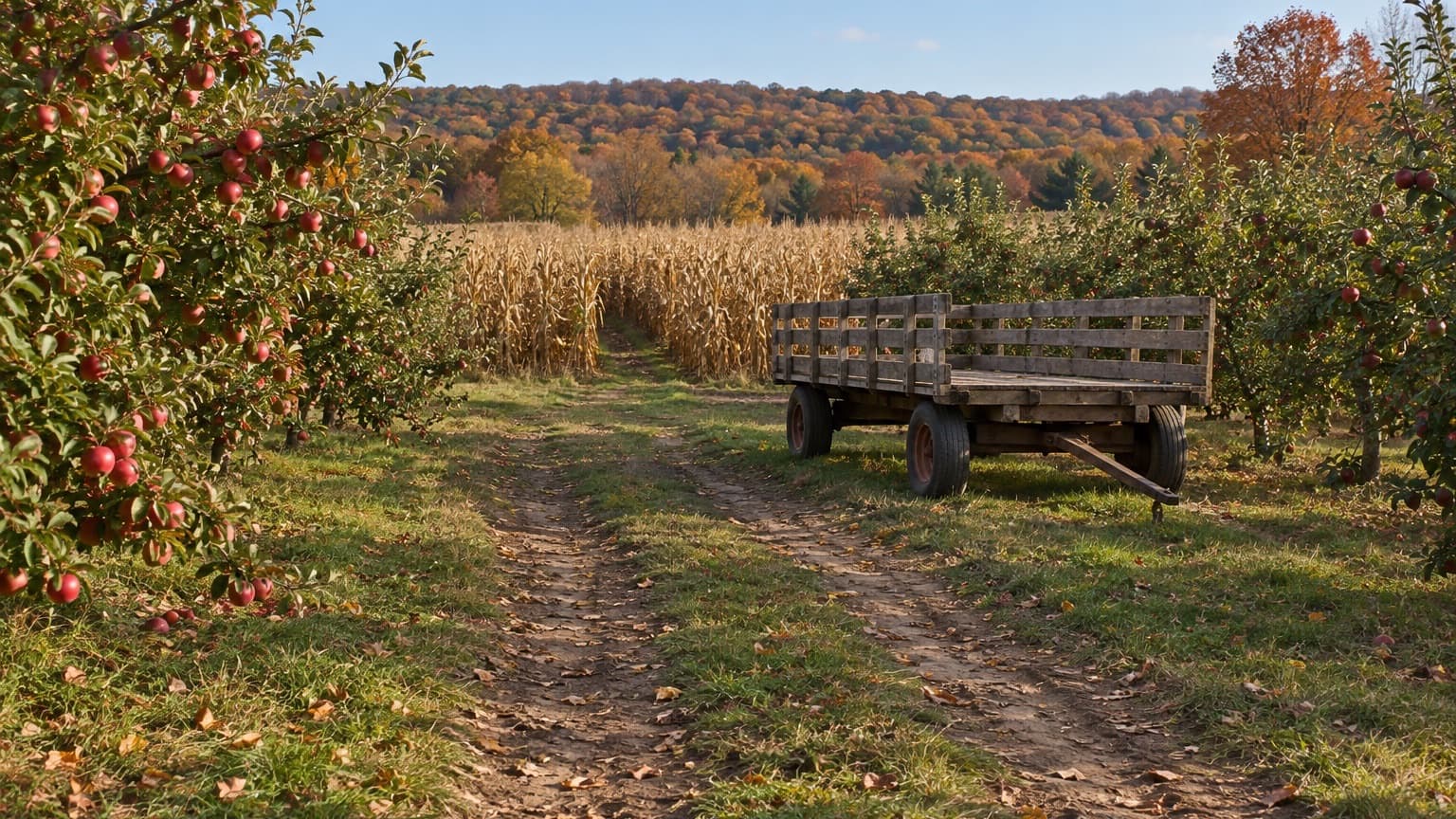
Many people assume that a farm, park or trail open to the public must keep its paths safe for visitors. In Connecticut, that is not always true. Whether the owner owed you that duty can depend on something as ordinary as whether you paid to get in.
October is when families in Connecticut typically drive out to pick apples, walk a corn maze or hike to the top of Sleeping Giant. Some of those outings end with a broken ankle in a rutted row, a fall from a hay wagon or a slip on a washed-out section of trail. When that happens, one of the first legal questions is what kind of land you were on, who owns it, and on what terms you were there.
What Connecticut's Recreational Use Law Says
Connecticut's recreational use statute limits what a landowner owes to people who use the land for free recreation. Under C.G.S. § 52-557g, an owner who makes land available to the public "without charge, rent, fee or other commercial service" for recreational purposes generally owes those visitors no duty of care to keep that land safe, and no duty to warn of a dangerous condition. But C.G.S. § 52-557h keeps the owner's liability for a wilful or malicious failure to guard or warn, and the protection does not apply when the owner charges people to enter for recreation.
Connecticut premises law normally sorts visitors into categories, such as invitees and licensees, to decide what care an owner owed them. When the statute applies, a person allowed on the land for free recreation is not treated as an invitee or licensee who is owed a duty of care.
Section 52-557f lists examples of recreational purposes, including hiking, picnicking, bicycling, nature study and viewing scenic sites. The list is not exclusive. Whether a particular activity, such as picking apples, counts may be argued.
The legislature wanted private owners to open fields, woods and lakes to the public, and it limited their liability to encourage that. The trade-off is that a person hurt on free land often has a harder claim than a person hurt in a store.
Paying To Get In Can Change The Analysis
Section 52-557h has two exceptions. The first, mentioned above and discussed below, is a wilful or malicious failure to guard or warn. The second applies in any case where the owner charges people to enter or go on the land for recreation.
The statute defines a charge as "the admission price or fee asked in return for invitation or permission to enter or go upon the land." In Genco v. Connecticut Light & Power Co., 7 Conn. App. 164, 170-71 (1986), the Appellate Court read that to mean an actual admission price paid for permission to enter the land at the time of use. In that case, fees that marinas and town beaches collected from their own users did not count as charges by the company that owned the lake.
In practical terms, a ticket to walk a corn maze looks like an admission price. A free walking trail does not. The harder cases sit in between:
- a farm that lets anyone walk in but sells the apples you pick by the bag
- a parking fee collected at a lot near a trailhead
- a suggested donation at the gate
- a hayride ticket sold on a farm you could walk onto for free
- a farm stand on the same property as a free walking path
The statute's "other commercial service" language may also matter in those cases. The answer can depend on who collected the money and what it paid for.
A separate statute, § 52-557k, limits the liability of an owner who lets people harvest fruits or vegetables for free on behalf of a nonprofit. It expressly does not apply to a pick-your-own operation or to a farm that invites the public and charges for the produce they harvest.
What A Paying Visitor Is Owed
When the recreational use statute does not apply, ordinary premises liability rules generally do. A paying customer at a farm or attraction is usually a business visitor, and Connecticut's civil jury instructions describe a business visitor as an invitee. The owner owes an invitee a duty to use reasonable care to inspect and maintain the premises and make them reasonably safe, to warn of or guard against defects the visitor could not reasonably be expected to discover, and to conduct activities on the premises reasonably.
That does not make the owner responsible for every fall. A farm field is uneven by nature, and a corn maze has corn stalks and dirt paths. A key question is often whether a particular hazard, such as a hidden hole, a broken step on a wagon or an unlit drop near a parking area, was one the owner knew or should have known about and failed to address.
Your own conduct also counts. Section 52-557i says the recreational use law does not relieve visitors of their own duty to use care. Under C.G.S. § 52-572h, Connecticut's comparative negligence rule, an injured person's recovery is reduced by their share of fault and barred if that share is greater than the combined fault of the people from whom recovery is sought.
When Free Land Can Still Lead To A Claim
The first exception in § 52-557h keeps an owner's liability for a "wilful or malicious failure to guard or warn against a dangerous condition, use, structure or activity." This exception is narrow. When the statute applies, carelessness alone is not enough to make the owner responsible, because the law removes the ordinary duty of care.
Connecticut's appellate courts have not defined "wilful or malicious" under this statute, but the bar is high. Under a related law that protects landowners from claims by snowmobile, all-terrain vehicle and motorcycle riders, the Connecticut Supreme Court held that the wilfulness must extend to both the act and the harm it causes. In that case, a motorcycle rider was killed after striking a chain or cable stretched across a private road where, the complaint said, it could not readily be seen. The court held that calling it a "trap," in a complaint that otherwise alleged only carelessness, did not turn it into a wilful-conduct claim. Warner v. Leslie-Elliott Constructors, Inc., 194 Conn. 129, 138-39 (1984). Trial courts have applied the same strict standard to the recreational use statute. See, e.g., Burgess v. State, 52 Conn. Supp. 562, 572-73 (Super. Ct. 2012).
The Appellate Court in Genco also held that calling a claim a nuisance instead of negligence did not get around the statute. See Genco, 7 Conn. App. at 171-72.
Town And State Land Follow Their Own Rules
Since 2011, the recreational use statute has also covered towns and other local public bodies, such as special districts and water or sewer districts, and § 52-557f now lists them as owners. Before that change, Connecticut's Supreme Court had read the law since 1996 to protect only private landowners. In Blonski v. Metropolitan District Commission, 309 Conn. 282, 304 (2013), the court noted that the legislature changed the law in 2011.
But the law does not protect a town or other local public body everywhere. It does not cover swimming pools, playing fields or courts, playgrounds, buildings with electrical service, or attached machinery, if the town or other body possesses and controls them. It also does not cover a paved public through road open to cars. So a fall on a town hiking trail and a fall on a town playground can be treated very differently. Some claims against a town also carry their own notice rules and deadlines, which we explain in our article on notice deadlines for injury claims against a city or town.
State land, such as Sleeping Giant State Park in Hamden, works differently. You generally cannot simply sue the State of Connecticut for an injury. The claim usually has to start with a state office, the Office of the Claims Commissioner. Under C.G.S. § 4-148, the claim generally must be filed there within one year after it accrues (usually the day you are hurt, or when you discover or reasonably should have discovered the injury), with a three-year outer limit from the event, except in narrow circumstances. That is shorter than the two-year deadline for many claims against a private owner, discussed below. Whether the recreational use law protects the state itself is unsettled. The 2011 change added towns and other local bodies, but not the state, and two 2025 trial court decisions held that the state cannot use the law as a defense. An earlier decision went the other way, and no Connecticut appellate court has decided the question. See Diaz v. State, 2025 Conn. Super. LEXIS 3391 (Dec. 4, 2025); Messing v. State, 2025 Conn. Super. LEXIS 996 (May 19, 2025); Burgess, 52 Conn. Supp. at 567-71.
What To Do After A Fall At A Farm, Maze Or Trail
Get medical care first. Then, while the details are fresh:
- Keep the ticket, wristband or receipt. Proof of what you paid, and for what, may decide whether the recreational use statute applies at all.
- Photograph the spot. Take pictures of the hole, the step, the wagon, the trail washout or the lighting. Conditions on a farm can change by the next weekend.
- Write down where you were. Note the field, row, trail marker or landmark, along with any signs at the entrance or near the hazard.
- Get names. Ask for the names of staff who helped you and of other visitors who saw the fall.
- Ask whether an incident report was made. A business may write one, but it was not written for you. Write your own account the same day.
- Notice what changes afterward. If the owner fills the hole or fixes the step, that repair usually cannot be used as evidence that the owner was careless, but it may still matter for other purposes. Your photos of the condition before the repair often matter far more than the repair itself.
- Mind the deadline. For a negligence claim against a private owner, C.G.S. § 52-584 generally allows two years from when the injury is first suffered or discovered, or reasonably should have been discovered, with a three-year outer limit from the owner's act or failure to act unless an exception applies. A claim involving a town or the state can have a much shorter deadline.
Talk with a lawyer before you file anything against a farm. Under Connecticut's § 52-568a, a person, or the person's attorney, who sues a qualifying pick-your-own or cut-your-own farm without probable cause (a reasonable basis for the claim) can be ordered to pay the farm double damages, and treble damages if the suit was also brought with malicious intent. The statute targets suits brought without probable cause, not every claim against a farm, but it is one more reason to have the facts reviewed first.
If you were hurt at a farm, orchard, corn maze, park or trail this fall, contact our office for a free consultation. Our New Haven slip and fall attorneys can look at who owns the land, what you paid, what the owner knew and which deadline applies, and explain your options.
Frequently Asked Questions
- I fell on a free hiking trail in Connecticut. Can the landowner be responsible?
- Usually not for ordinary carelessness, but there are exceptions. Under C.G.S. § 52-557g, an owner who opens land to the public without charge for recreation, including hiking, generally owes no duty to keep it safe or to warn of dangerous conditions. Section 52-557h keeps the owner's liability for a wilful or malicious failure to guard or warn against a dangerous condition, and the protection does not apply when the owner charges people to enter for recreation. Who owns the land also matters. Some town property, such as playgrounds, playing fields and pools the town possesses and controls, is not covered land for the town, and a claim over a fall in a state park generally starts with the Office of the Claims Commissioner on a one-year deadline.
- Does buying a ticket to a corn maze or hayride change my rights?
It may. The recreational use law does not protect an owner who charges people to come onto the land for recreation, and Connecticut's Appellate Court has read "charge" to mean an admission price paid for permission to enter the land. A ticket for a ride on a farm you could otherwise walk onto for free is a harder question, and who collected the money and what it paid for may matter. When the recreational use statute does not apply, a paying visitor is generally treated as an invitee, and Connecticut's civil jury instructions say the owner owes an invitee reasonable care to inspect and maintain the premises and to warn of defects the visitor could not reasonably be expected to discover. That does not mean the owner is automatically responsible for a fall. You still have to show the owner failed to use reasonable care, and your own share of fault can reduce or bar a recovery.
- Does a parking fee count as paying to get in?
Not necessarily. Connecticut's statute defines a charge as the admission price or fee asked in return for permission to enter or go upon the land, and the Appellate Court has said that fees collected by others operating on the land were not the owner's charge. Whether a parking fee, a price per bag of picked apples or a suggested donation counts can depend on who collected it and what it paid for. Keep the receipt either way, and have a lawyer review the facts.
- Does the recreational use law protect a town park?
Partly. Since a 2011 change in the law, Connecticut towns and other local public bodies, such as special districts and water or sewer districts, can be "owners" protected by the recreational use statute. For a town, though, the protection does not cover swimming pools, playing fields or courts, playgrounds, buildings with electrical service, or attached machinery, if the town possesses and controls them, and it does not cover a paved public through road open to cars. A fall on a town trail and a fall on a town playground can therefore be treated very differently, and a claim against a town can carry its own notice rules and deadlines.
- How long do I have after a fall at a Connecticut state park?
- Generally one year to file a claim with the Office of the Claims Commissioner. Under C.G.S. § 4-148, a personal injury claim against the state generally must be filed within one year after it accrues. The claim accrues when the injury is suffered or discovered, or reasonably should have been discovered, and the statute sets a three-year outer limit from the event, with narrow exceptions. A negligence lawsuit against a private owner generally must be brought within two years after the injury is first suffered or discovered, or reasonably should have been discovered, with a three-year outer limit from the owner's act or failure to act unless an exception applies. Do not assume that longer period applies to a claim against the state.
This article provides general information, not legal advice for a particular case. Reading it does not create an attorney-client relationship.